FREAK
FREAK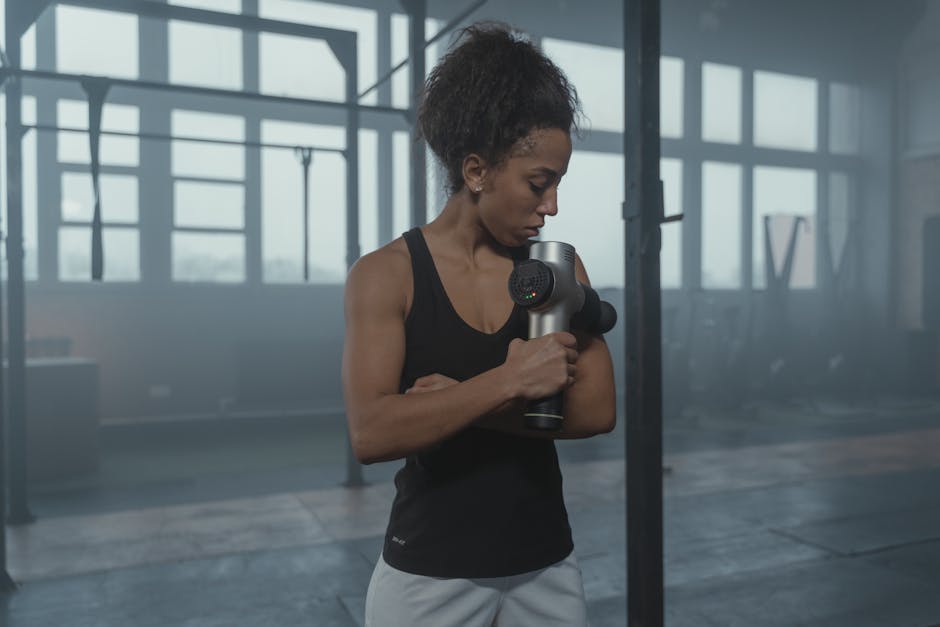
Theragun or Hypervolt. It's the massage gun question that dominates every fitness forum, Reddit thread, and "what should I buy" conversation. Both brands have earned their reputations. Both make legitimately good devices. And both charge enough that you want to get this decision right the first time.
We've tested the Theragun PRO Plus ($499) and Hypervolt 2 Pro ($329) side by side for eight weeks -- across heavy lifting sessions, long runs, travel, and daily recovery -- to give you the definitive comparison. No brand loyalty. No filler. Just specs, performance, and an honest recommendation.
The Quick Answer
Theragun PRO Plus if you want maximum power, deepest tissue penetration, and multi-therapy features (heat, LED, vibration, cold). You'll pay more and carry more weight.
Hypervolt 2 Pro if you want the best pure percussion experience with superior noise levels, battery life, and portability at $170 less. You'll sacrifice some depth and multi-therapy capabilities.
Both are excellent. Neither is a bad choice. But they serve different priorities.
Side-by-Side Specifications
| Feature | Theragun PRO Plus | Hypervolt 2 Pro | Winner |
|---|---|---|---|
| Price | $499 | $329 | Hypervolt |
| Amplitude | 16mm | 14mm | Theragun |
| Stall Force | 60 lbs | 40 lbs | Theragun |
| Speed Settings | 5 | 3 | Theragun |
| Max PPM | 2,400 | 2,400 | Tie |
| Weight | 2.8 lbs | 2.6 lbs | Hypervolt |
| Battery Life | ~150 min | ~180 min | Hypervolt |
| Noise Level | ~60-68 dB | 55-66 dB | Hypervolt |
| Attachments | 5 + heat/vibration | 5 | Theragun |
| Heat Therapy | Yes | No | Theragun |
| LED Therapy | Yes (13 LEDs) | No | Theragun |
| Vibration Mode | Yes | No | Theragun |
| Cold Therapy | Yes (sold separately) | No | Theragun |
| Display | LCD with guided routines | LED indicator | Theragun |
| Connectivity | Bluetooth (Therabody app) | Bluetooth (Hyperice app) | Tie |
| Carrying Case | Included | Not included | Theragun |
| Warranty | 2 years | 1 year | Theragun |
| TSA Carry-On | Yes | Yes | Tie |
| FDA Status | FDA Registered | Not registered | Theragun |
The spec sheet heavily favors the Theragun. It should -- it costs $170 more. But specs don't tell the whole story. Let's break down what actually matters in practice.
Power and Depth: Theragun Wins
This is the category where the Theragun PRO Plus pulls ahead decisively. The 16mm amplitude is the deepest available in any consumer massage gun, and the difference between 14mm and 16mm is noticeable -- particularly on large, dense muscle groups.
What 2mm of Amplitude Actually Means
Amplitude measures the distance the massage head travels back and forth. More amplitude means deeper tissue penetration per stroke. On smaller muscles (forearms, calves, deltoids), 14mm and 16mm feel nearly identical. On large, dense muscles -- deep glutes, thick quads, IT band, upper traps under heavy tension -- the extra 2mm means the Theragun reaches tissue that the Hypervolt simply can't access without applying unreasonable pressure.
A 2014 study in the Journal of Clinical and Diagnostic Research found that percussion therapy at higher amplitudes produced greater reductions in DOMS and improved range of motion compared to lower-amplitude devices. While the study didn't compare 14mm vs. 16mm specifically, the principle holds: deeper mechanical penetration accesses more muscle tissue.
Stall Force Matters More Than You Think
Stall force is how much pressure you can apply to the device before the motor stalls (stops). The Theragun's 60 lbs of stall force means you can lean your full body weight into the device on large muscle groups without it slowing down. The Hypervolt's 40 lbs is adequate for most use, but under aggressive pressure on dense tissue, you'll feel the motor working harder and occasionally slowing.
This matters most for:
- Self-treatment of the IT band (requires significant pressure to access)
- Deep glute work (thick muscle layers need penetrating force)
- Upper trap release (many people carry dense tension here)
- Treatment by a partner or therapist (who can apply more controlled force than self-treatment)
If you regularly need to dig deep with maximum pressure, the Theragun's 60 lbs stall force is a meaningful advantage. If your typical use involves moderate pressure on standard muscle groups, 40 lbs is sufficient.
Noise: Hypervolt Wins Decisively
The Hypervolt 2 Pro is quieter than the Theragun PRO Plus at every speed setting, and the difference is meaningful in real-world use.
At the lowest speed, the Hypervolt produces approximately 55 dB -- about the volume of a quiet office. The Theragun produces approximately 60 dB. At maximum speed under load, the Hypervolt reaches approximately 66 dB (normal conversation), while the Theragun reaches approximately 68 dB.
The numbers look close on paper, but the decibel scale is logarithmic. A 5 dB difference represents a roughly 50% increase in perceived loudness. The Hypervolt is noticeably quieter in use, and that gap widens at lower speed settings where the difference in perceived noise is most apparent.
When Noise Matters
- Shared living spaces: If your partner is sleeping, working, or watching TV, the Hypervolt is significantly less intrusive
- Office use: The Hypervolt is usable in an office setting without drawing attention; the Theragun, while much improved over previous generations, is borderline
- Video calls: The Hypervolt can operate during a call without registering on microphones at lower speeds; the Theragun cannot
- Gym or locker room: Both are fine; noise is irrelevant in an already loud environment
- Travel (hotel rooms): The Hypervolt won't disturb neighboring rooms; the Theragun might at higher speeds
If noise sensitivity is not a factor for you, this category doesn't matter. If it is, the Hypervolt's advantage is substantial.
Battery Life: Hypervolt Wins
The Hypervolt 2 Pro delivers approximately 180 minutes (3 hours) of battery life, compared to the Theragun PRO Plus's approximately 150 minutes. The Hypervolt's advantage increases further when the Theragun's heat and LED attachments are used, as these draw additional power and can reduce battery life to 90-120 minutes.
For practical daily use (10-15 minute sessions), both devices last well over a week between charges. The difference becomes meaningful for therapists treating multiple clients per day, athletes using the device for extended sessions, or travelers who can't charge daily.
Both devices charge via USB-C. The Theragun offers a removable battery (replaceable and swappable), which the Hypervolt does not. This is a Theragun advantage for long-term device lifespan and extended use scenarios (carry a second battery for all-day events or clinical settings).
Multi-Therapy Features: Theragun Stands Alone
The Theragun PRO Plus integrates five therapy modalities. The Hypervolt 2 Pro offers percussion only. This is the most significant philosophical difference between the devices.
Heat Therapy (Theragun Only)
Three temperature settings (113, 122, 131 F) applied through dedicated heat attachments. Heat increases tissue pliability, blood flow, and pain threshold before or during deep percussion. A 2020 systematic review in Physical Therapy in Sport found that combining heat with mechanical therapy enhanced muscle relaxation and pain reduction compared to mechanical therapy alone.
Practical impact: Heat + percussion is noticeably more effective for chronic muscle tension (upper traps, hip flexors, thoracic spine) than percussion alone. This is the multi-therapy feature that provides the most tangible benefit.
Near-Infrared LED Therapy (Theragun Only)
Thirteen LEDs deliver near-infrared light during treatment. Photobiomodulation stimulates mitochondrial function and ATP production, potentially enhancing tissue repair and reducing inflammation. A 2018 meta-analysis in Lasers in Medical Science found that photobiomodulation therapy reduced DOMS and improved muscle recovery, though most studies used dedicated LED panels rather than handheld devices.
Practical impact: The LED therapy adds a recovery dimension, but the real-world benefit during a 10-minute handheld percussion session is modest. This feature is most relevant for targeted, sustained treatment of specific areas (not quick full-body passes).
Vibration Therapy (Theragun Only)
Low-intensity, high-frequency vibration for sensitive areas, nerve-adjacent tissue, and gentle recovery work. Useful when deep percussion is inappropriate -- face, neck, injured areas, or extremely sore tissue.
Practical impact: A nice-to-have feature that most users will use occasionally. Not a primary reason to choose the Theragun.
Cold Therapy (Theragun Only, Sold Separately)
A cold therapy attachment that provides cryotherapy during treatment. Effective for acute inflammation and post-exercise recovery. However, this attachment is sold separately and adds to an already premium price.
Practical impact: Useful for specific acute recovery scenarios. The separate purchase requirement is a drawback.
Do Multi-Therapy Features Justify $170?
This is the central question. If you'll regularly use heat therapy combined with percussion for chronic tension, the answer is yes -- the combination is genuinely more effective than percussion alone, and buying separate heat therapy tools would cost more than the $170 premium. If you'll primarily use the device for percussion only (which describes most massage gun users), the Hypervolt delivers the core experience at $329.
Weight and Portability: Hypervolt Wins
| Factor | Theragun PRO Plus | Hypervolt 2 Pro |
|---|---|---|
| Weight | 2.8 lbs | 2.6 lbs |
| Carrying Case | Included | Not included |
| TSA Carry-On | Yes | Yes |
| Form Factor | Triangular grip | Cylindrical grip |
The Hypervolt is lighter by 0.2 lbs -- a small difference on paper but noticeable during extended self-treatment. Over a 15-minute session where you're holding the device overhead, to the side, or at arm's length, less weight means better technique and less arm fatigue.
The Theragun's triangular grip design is ergonomically superior for sustained use -- it allows you to apply force from multiple angles without changing your grip, reducing wrist strain. The Hypervolt's cylindrical grip is more conventional and comfortable for most hand sizes.
The Theragun includes a premium carrying case. The Hypervolt does not. For travelers, this is a genuine Theragun advantage (or an additional $20-30 expense for a third-party Hypervolt case).
App Experience: Tie
Both devices connect via Bluetooth to their respective apps (Therabody app and Hyperice app), and both apps offer guided recovery routines organized by body part, activity type, and recovery goal.
The Therabody app includes integration with the heart rate sensor (PRO Plus only), routines that incorporate heat and LED therapy timing, and the ability to control speed and therapy mode from your phone. It's slightly more feature-rich due to the multi-therapy integration.
The Hyperice app is cleaner and more focused, with routines that guide you through specific body regions with recommended speed settings and duration. It integrates with other Hyperice products (NormaTec, Venom, Vyper) for athletes with a full Hyperice ecosystem.
Both apps are well-designed and useful for beginners. Neither is a reason to choose one device over the other. Experienced users will likely stop using either app after the first few weeks and develop their own routines.
Attachments: Theragun Has More
The Theragun PRO Plus ships with five percussion attachments (Dampener, Standard Ball, Thumb, Micro-Point, Wedge) plus heat and vibration therapy attachments -- seven total. The Hypervolt 2 Pro ships with five attachments (Flat, Ball, Fork, Cushion, Bullet).
Both kits cover the essential use cases: broad coverage (flat/dampener), general purpose (ball), targeted pressure (thumb/bullet), and spinal/neck work (fork/wedge). The Theragun's additional heat and vibration attachments extend its versatility.
In practice, most users settle into using 2-3 attachments regularly regardless of how many come in the box. The attachment count is a marginal factor in the decision.
Durability and Warranty
The Theragun PRO Plus carries a two-year warranty. The Hypervolt 2 Pro carries a one-year warranty. For a $329-$499 purchase, warranty duration matters. Therabody's two-year coverage provides meaningfully more protection and reflects confidence in the device's durability.
Both devices are built with premium materials and engineered for daily use. In our testing, neither showed signs of wear, motor degradation, or build quality issues over the testing period. Long-term durability reports from both brands are generally positive across online communities and professional users.
Who Wins Each Category
| Category | Winner | Margin |
|---|---|---|
| Power (Amplitude + Stall Force) | Theragun | Large |
| Noise | Hypervolt | Large |
| Battery Life | Hypervolt | Moderate |
| Multi-Therapy Features | Theragun | Large (sole provider) |
| Weight/Portability | Hypervolt | Small |
| App Experience | Tie | -- |
| Attachments | Theragun | Small |
| Warranty | Theragun | Moderate |
| Build Quality | Tie | -- |
| Price/Value | Hypervolt | Large |
The Theragun wins more categories. The Hypervolt wins the categories that matter most to most buyers (noise, battery, portability, price).
Our Recommendation
Buy the Theragun PRO Plus ($499) if:
- You need maximum percussion depth for large, dense muscle groups (16mm amplitude, 60 lbs stall force)
- You'll actually use heat therapy -- this is the killer feature that sets the Theragun apart for chronic muscle tension
- You're a physical therapist, trainer, or bodyworker who benefits from multi-modality treatment options
- You want the longest warranty and most comprehensive feature set available
- You have chronic muscle tension and need the combination of heat + deep percussion to address it effectively
- Budget is secondary to capability -- you want the most advanced device regardless of price
Buy the Hypervolt 2 Pro ($329) if:
- You want quiet operation -- this is non-negotiable for shared spaces, travel, or noise-sensitive environments
- Portability matters -- lighter weight, longer battery, TSA-friendly
- You want the best value in premium percussion -- 80-90% of the Theragun's percussion performance at 66% of the cost
- You'll only use percussion and don't need heat, LED, vibration, or cold therapy features
- You're a first-time buyer who wants an excellent device without overspending
- You're a frequent traveler who needs reliable recovery on the road
The Honest Truth
For most people -- recreational athletes, gym-goers, weekend warriors, and fitness enthusiasts -- the Hypervolt 2 Pro is the better buy. It delivers excellent percussion therapy in a quiet, portable, well-built package at a price that doesn't require justification. The Theragun PRO Plus is the better device in absolute terms, but the incremental benefit doesn't justify the $170 premium for users who won't utilize the multi-therapy features.
If you're a serious competitor, a professional who treats clients, or someone with chronic tension who will genuinely use heat + percussion three or more times per week, the Theragun earns its premium. For everyone else, the Hypervolt is the smarter investment.
The Bottom Line
This isn't a case of good vs. bad. Both Theragun and Hypervolt make excellent massage guns backed by serious engineering and professional sports validation. The choice comes down to priorities:
Theragun PRO Plus = Power + Features. The most capable recovery device available, with five therapy modalities, 16mm amplitude, and 60 lbs stall force. $499.
Hypervolt 2 Pro = Refinement + Value. The most refined pure percussion experience available, with best-in-class noise levels, battery life, and portability. $329.
Pick the one that matches your actual use case, not the one that looks better on a spec sheet you'll never reference again after purchase.
Where to Buy
Theragun PRO Plus:
- Buy from Therabody -- $499.00
- Buy on Amazon -- $499.00
Hypervolt 2 Pro:
- Buy from Hyperice -- $329.00
- Buy on Amazon -- $329.00
Prices shown may vary. Links may be affiliate links.
Related Reading
- Theragun PRO Plus Review -- full Theragun deep dive
- Hypervolt 2 Pro Review -- full Hypervolt deep dive
- Best Massage Guns 2026 -- the complete massage gun landscape
- Best Recovery Tools for Athletes 2026 -- massage guns in the broader toolkit
- Best Foam Rollers 2026 -- the budget complement
FAQ
Is Theragun really worth $170 more than Hypervolt?
Only if you'll use the multi-therapy features -- specifically heat therapy, which is the most impactful addition. If you'll only use percussion, the Theragun delivers incrementally better percussion (16mm vs. 14mm, 60 vs. 40 lbs stall force) but the Hypervolt's advantages in noise, battery, and weight make it the better overall value for percussion-only use.
Can I use either massage gun on my neck?
Yes, both can be used on the neck with appropriate attachments and technique. Use the lowest speed setting, a soft attachment (Dampener for Theragun, Cushion for Hypervolt), and light pressure. Avoid the front of the neck, the throat, and the carotid artery area. Focus on the upper trapezius and posterior cervical muscles only. If you have any cervical spine conditions, consult a healthcare provider first.
Which massage gun is quieter?
The Hypervolt 2 Pro is quieter at every speed setting. At the lowest speed, it produces about 55 dB compared to the Theragun's approximately 60 dB. At maximum speed, the Hypervolt reaches about 66 dB vs. the Theragun's approximately 68 dB. The decibel scale is logarithmic, so a 5 dB difference at lower settings represents a roughly 50% increase in perceived loudness.
Do I need a massage gun if I already foam roll?
They serve complementary purposes. Foam rolling provides broad, self-directed myofascial release using body weight. A massage gun provides targeted, precise percussion to specific muscle areas. Most physical therapists recommend using both: foam rolling for general warm-up and broad tissue preparation, massage gun for targeted post-workout recovery on specific muscle groups.
How long do these massage guns last?
Both the Theragun PRO Plus and Hypervolt 2 Pro are built for daily professional use and should last 3-5+ years with normal care. The Theragun's two-year warranty and replaceable battery may extend its useful life. The Hypervolt's one-year warranty and sealed battery are disadvantages for long-term ownership. Either device will outlast multiple budget massage guns.
Are there cheaper alternatives worth considering?
Yes. The Ekrin B37 ($229) offers 56 lbs stall force at a lower price, though with only 12mm amplitude. The Theragun Elite ($299) provides the same 16mm amplitude as the PRO Plus but without multi-therapy features and with lower stall force (40 lbs). Budget options in the $80-150 range (Lifepro, Bob and Brad) deliver functional percussion for casual users but with significant trade-offs in noise, build quality, and motor consistency.
Affiliate Disclosure: Freak Naturals may earn a commission on purchases made through links in this article. This does not affect our editorial independence — we recommend products based on research and testing, not commissions.