FREAK
FREAK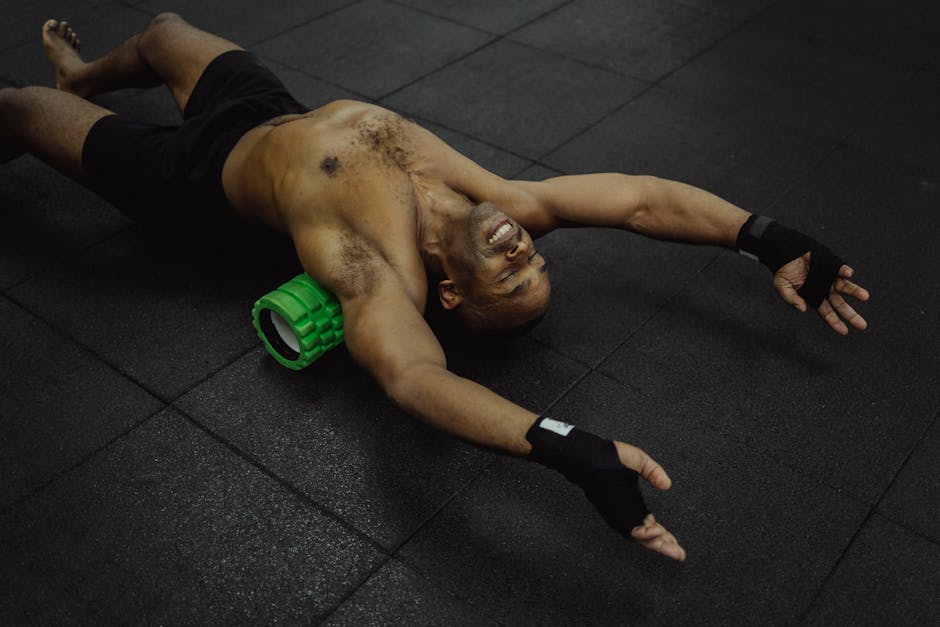
A foam roller is the cheapest, most effective recovery tool you can own. No batteries, no app, no subscription. Just a cylinder and your body weight. The problem is choosing the right one from the dozens of options available -- smooth vs. textured, soft vs. firm, standard vs. vibrating -- each with different trade-offs that matter more than manufacturers want to admit.
We tested foam rollers across every category to find the best options at each price point. Whether you're spending $15 or $149, this guide will help you pick the roller that matches your needs without overpaying for features you don't need.
Our Top Picks
| Category | Pick | Price | Best For |
|---|---|---|---|
| Best Overall | TriggerPoint GRID | $34.99 | Multi-density surface, durability, versatility |
| Best Vibrating Roller | Hyperice Vyper 3 | $149 | Enhanced myofascial release, warm-up |
| Best Budget | LuxFit Premium | $15 | Basic foam rolling on a budget |
| Best for Physical Therapy | OPTP Pro-Roller | $30 | Smooth, firm, clinical applications |
Foam Rolling Science: What the Research Says
Before spending a dollar, let's establish what foam rolling actually does -- and what it doesn't.
Myofascial Release
Foam rolling is a form of self-myofascial release (SMR). The theory: applying sustained pressure to muscle and fascial tissue reduces adhesions, increases tissue hydration, and restores optimal sliding between tissue layers. A 2015 systematic review in the International Journal of Sports Physical Therapy examined the evidence for foam rolling and found consistent benefits for:
- Improved range of motion without reducing muscle force production (unlike static stretching, which can temporarily decrease force output)
- Reduced DOMS (delayed onset muscle soreness) at 24, 48, and 72 hours post-exercise
- Enhanced pre-exercise warm-up when used as part of a dynamic warm-up routine
The review noted that 1-2 minutes per muscle group at moderate pressure appeared to be the optimal dose for most benefits.
What's Actually Happening Mechanically
The mechanism of foam rolling is debated. The traditional explanation -- "breaking up adhesions and scar tissue" -- is likely an oversimplification. A 2017 review in Current Sports Medicine Reports proposed that the primary mechanism is neurological rather than purely mechanical: sustained pressure on muscle and fascial tissue stimulates mechanoreceptors (Golgi tendon organs and Ruffini endings), which signals the nervous system to reduce muscle tone (stiffness). This is why foam rolling produces immediate improvements in flexibility and pain perception even when the actual tissue structure hasn't changed.
There's also a fluid dynamics component. Compression and release of tissue creates a "sponge effect" that pushes out interstitial fluid and inflammatory byproducts, followed by fresh fluid inflow when the pressure is released. This local circulation enhancement supports tissue health and recovery.
Foam Rolling vs. Static Stretching
A 2019 meta-analysis in the British Journal of Sports Medicine compared foam rolling to static stretching for improving range of motion. Both were effective, but foam rolling had a key advantage: it improved range of motion without the transient decrease in muscle force production associated with static stretching. This makes foam rolling the superior warm-up tool when strength or power output matters (essentially any athletic activity).
Bottom Line on the Science
Foam rolling works. The benefits are real but modest. It's most effective as a warm-up tool (improving range of motion without reducing force production) and as a recovery tool (reducing DOMS severity). It's not a miracle cure for injuries, chronic pain, or flexibility limitations, but consistent use produces meaningful improvements in tissue quality and movement capacity.
Foam Density Explained
Foam density is the most important variable when choosing a roller, and it's the one most frequently ignored.
Soft Density (EPE Foam)
- Firmness: Light pressure, compresses easily under body weight
- Best for: Beginners, people with low pain tolerance, elderly users, rehabilitation
- Material: Expanded polyethylene (EPE) or soft EVA foam
- Drawback: Wears out faster; insufficient pressure for deep tissue work on experienced users
Medium Density (EVA Foam)
- Firmness: Moderate pressure, good balance of comfort and effectiveness
- Best for: Most users, general fitness, regular training
- Material: Ethylene-vinyl acetate (EVA) foam or medium-density EPP
- Drawback: May feel too firm for beginners on sensitive areas (IT band, quads)
High Density (EPP Foam / Rigid Core)
- Firmness: Firm to aggressive pressure, minimal compression
- Best for: Experienced users, athletes, deep tissue work
- Material: Expanded polypropylene (EPP) or EVA over a rigid hollow core
- Drawback: Can be uncomfortable or painful for beginners and on bony areas
The Right Density for You
If you've never foam rolled before, start with medium density. Soft density won't provide enough pressure to be effective for most adults. High density is for experienced users who know their tissue tolerance and want deeper pressure. The TriggerPoint GRID (our top pick) solves the density dilemma with a multi-density surface that provides different pressure zones on the same roller.
Smooth vs. Textured Rollers
Smooth Rollers
Uniform surface with no ridges, bumps, or patterns. Smooth rollers distribute pressure evenly across the contact area, providing consistent, broad-stroke compression. They're the standard choice in clinical settings (physical therapy, rehabilitation) because the even pressure is predictable and controllable.
Best for: General myofascial release, warm-up, beginners, rehabilitation, broad muscle groups.
Textured Rollers
Ridges, bumps, grooves, or multi-density patterns on the surface. Textured rollers concentrate pressure on specific points, mimicking the varied pressure of a therapist's hands. The TriggerPoint GRID's patented surface, for example, includes flat bars (palm), tubular ridges (fingers), and domed bumps (fingertips) to provide different sensations and pressure intensities as you roll.
Best for: Targeted trigger point work, experienced users, athletes who want more specific tissue stimulation.
Which Is Better?
Neither is categorically better. Smooth rollers are safer for beginners and more appropriate for rehabilitation. Textured rollers provide a more stimulating experience and can target specific tissue areas more precisely. For most recreational athletes and fitness enthusiasts, a textured roller like the TriggerPoint GRID offers the best balance of versatility and effectiveness.
Vibrating Rollers: Worth the Premium?
Vibrating foam rollers add high-frequency vibration to the mechanical pressure of rolling. The premise: vibration enhances the neurological effects of foam rolling by further stimulating mechanoreceptors, increasing blood flow, and reducing pain perception during rolling.
What the Research Says
A 2019 study in the Journal of Sports Science and Medicine compared vibrating foam rolling to standard foam rolling and found that vibrating rollers produced greater improvements in range of motion and pain pressure threshold. The difference was statistically significant but modest in magnitude. A 2020 study in Clinical Biomechanics confirmed that vibration-enhanced foam rolling reduced muscle stiffness more than standard rolling in the short term (15-30 minutes post-treatment).
The Practical Question
Vibrating rollers cost 3-10x more than standard rollers ($100-200 vs. $15-35). The performance advantage is real but small. For most users, a quality standard roller provides 85-90% of the benefit at 20-25% of the cost. Vibrating rollers make the most sense for:
- Athletes who foam roll daily and want to maximize every session
- People who find standard foam rolling too painful (vibration raises pain threshold)
- Users who want a more engaging, productive warm-up routine
- Recovery enthusiasts who have already invested in other modalities and want to optimize this one
For the average gym-goer foam rolling 3-4 times per week, a standard textured roller is the better value.
Detailed Reviews
1. TriggerPoint GRID ($34.99) -- Best Overall
The TriggerPoint GRID has held the "best overall foam roller" position for over a decade, and it still earns it in 2026. The patented GRID surface pattern features three distinct zones: flat bars that mimic a therapist's palm for broad-stroke rolling, tubular ridges that mimic finger-like targeted pressure, and domed bumps that provide fingertip-like precision work. This multi-texture design means you get different pressure intensities on the same roller by simply rotating it.
The construction uses medium-to-high density EVA foam wrapped around a rigid hollow ABS core. This combination provides firm, consistent pressure that doesn't flatten or deform under body weight, even after months of daily use. The hollow core also reduces weight (just over 1 lb) and allows the roller to fit inside a gym bag or carry-on.
At 13 inches long and 5.5 inches in diameter, the standard GRID is compact enough for travel but adequate for most body regions. A 26-inch version is available if you want full back coverage.
Physical therapists consistently recommend the TriggerPoint GRID because it provides effective, varied pressure at a price point that doesn't exclude anyone. It's the default recommendation for a reason.
Specs: 13" x 5.5", EVA foam over ABS core, ~1.2 lbs, multi-density textured surface
Pros:
- Multi-texture surface provides three distinct pressure zones
- Rigid ABS core maintains shape and pressure consistency indefinitely
- Lightweight and portable -- fits in any gym bag
- Medium-firm density suits beginners and experienced users
- PT-recommended for over a decade
- $34.99 is accessible to every budget
Cons:
- 13" length is too short for full back rolling (26" version available)
- Multi-texture surface may be too intense for complete beginners on sensitive areas
- No vibration (standard roller only)
Where to buy: Amazon -- $34.99
2. Hyperice Vyper 3 ($149) -- Best Vibrating Roller
The Hyperice Vyper 3 is the premium option for athletes who want to maximize foam rolling effectiveness. It combines a high-density roller surface with three levels of high-frequency vibration (35, 46, 68 Hz) that enhance the myofascial release effect beyond what standard rolling provides.
The vibration isn't a gimmick. A 2019 study in the Journal of Sports Science and Medicine demonstrated that vibrating foam rollers produced statistically greater improvements in range of motion and pain pressure threshold compared to standard rollers. The Vyper 3's three vibration levels let you calibrate the intensity -- lower frequencies for gentle warm-up and sensitive areas, higher frequencies for aggressive tissue mobilization.
The roller itself is firm with a smooth, ridged surface that provides consistent pressure. Battery life is approximately 2 hours per charge, which is ample for daily use (typical sessions are 5-10 minutes). At 2.2 lbs it's heavier than a standard roller but still portable.
The Vyper 3 connects to the Hyperice app via Bluetooth for guided routines, though this is a nice-to-have rather than a necessity.
Specs: 12.5" x 6", high-density surface, 2.2 lbs, 3 vibration levels (35/46/68 Hz), Bluetooth, ~2 hr battery
Pros:
- Clinically validated vibration enhancement to foam rolling
- Three vibration frequencies cover gentle to aggressive use
- High-density construction maintains pressure under load
- Hyperice app offers guided routines
- 2-hour battery life supports multiple sessions per charge
- TSA-approved for travel
Cons:
- $149 is 4x the price of the TriggerPoint GRID for incremental benefit
- Requires charging (unlike passive rollers)
- Heavier at 2.2 lbs -- noticeable in a gym bag
- Smooth surface lacks the multi-texture variety of the GRID
- The vibration can be distracting for some users
Where to buy: Hyperice direct -- $149 | Amazon -- $149
3. LuxFit Premium ($15) -- Best Budget
Sometimes the best tool is the simplest. The LuxFit Premium is a smooth, medium-density EPP foam roller with no textures, no core, and no features beyond being a well-made cylinder of foam. And for $15, it does the job.
The 36-inch length covers your entire back in a single roll, which is a genuine advantage over shorter rollers for thoracic mobility and upper back work. The medium density is appropriate for beginners and intermediate users, providing enough pressure to be effective without being punishing.
The trade-off is durability. Without a rigid core, the LuxFit will eventually deform under repeated use (typically 6-12 months of daily use). But at $15, replacing it annually costs less than a single session with a massage therapist. This is the roller we recommend for beginners, casual gym-goers, and anyone who wants to try foam rolling without a significant investment.
Specs: 36" x 6", EPP foam (no core), ~1.5 lbs, smooth surface, medium density
Pros:
- $15 -- the cheapest effective foam roller available
- 36" length is ideal for full back rolling and bilateral stretches
- Medium density suits most beginners and general fitness users
- Simple, no-maintenance, no-battery design
- Lightweight and easy to store
Cons:
- No rigid core -- will deform over time with heavy daily use
- Smooth surface provides uniform pressure only (no targeted texture)
- Medium density may feel too soft for advanced users or deep tissue work
- No travel-friendly size option
Where to buy: Amazon -- $15
4. OPTP Pro-Roller ($30) -- Best for Physical Therapy
The OPTP Pro-Roller is the clinical standard. Used in physical therapy clinics, rehabilitation centers, and university exercise science programs, it's a smooth, firm, closed-cell foam roller designed for controlled, consistent pressure application. No textures, no gimmicks -- just a reliable cylinder of professional-grade foam.
The closed-cell construction (EPP or similar) resists moisture, odor, and deformation significantly better than open-cell foam rollers. The firm density provides substantial pressure without a rigid core, which some therapists prefer for spinal mobility work where a hard core can be uncomfortable.
At 36 inches long and 6 inches in diameter, the OPTP Pro-Roller covers full back rolling and accommodates a wide range of body sizes. The smooth surface is intentional -- in clinical settings, predictable, uniform pressure is preferable to textured surfaces that may concentrate force unpredictably on healing or sensitive tissue.
Specs: 36" x 6", closed-cell EPP foam, firm density, smooth surface, ~1.4 lbs
Pros:
- Clinical-grade construction used in PT settings nationwide
- Closed-cell foam resists moisture, odor, and bacterial growth
- Firm density provides deep pressure without a hard core
- 36" length for full back coverage
- Smooth surface for controlled, predictable pressure
- $30 is exceptional value for professional-grade quality
Cons:
- No textured surface for targeted work
- Firm density may be too intense for beginners
- Smooth design is less stimulating than multi-texture rollers for general fitness use
- Plain aesthetic (though this is irrelevant to function)
Where to buy: Amazon -- $30
Comparison Table
| Feature | TriggerPoint GRID | Hyperice Vyper 3 | LuxFit Premium | OPTP Pro-Roller |
|---|---|---|---|---|
| Price | $34.99 | $149 | $15 | $30 |
| Length | 13" (26" available) | 12.5" | 36" | 36" |
| Diameter | 5.5" | 6" | 6" | 6" |
| Surface | Multi-texture (3 zones) | Ridged, smooth | Smooth | Smooth |
| Density | Medium-firm (EVA/ABS core) | Firm (solid) | Medium (EPP) | Firm (closed-cell EPP) |
| Vibration | No | Yes (3 levels) | No | No |
| Weight | ~1.2 lbs | 2.2 lbs | ~1.5 lbs | ~1.4 lbs |
| Durability | Excellent (rigid core) | Excellent (solid construction) | Moderate (no core) | Good (closed-cell) |
| Best For | Most users, versatility | Performance athletes, warm-up | Beginners, budget | PT, rehabilitation |
How to Foam Roll: Essential Technique
Effective foam rolling isn't just lying on a cylinder and hoping for the best. Here are the evidence-based principles:
Duration
Spend 1-2 minutes per muscle group. Research consistently shows that 60-120 seconds of rolling per area produces the majority of benefits. Longer isn't necessarily better -- diminishing returns set in after 2 minutes per area.
Pressure
Apply enough pressure that you feel a "good hurt" -- discomfort that is tolerable and doesn't cause you to tense up or hold your breath. If you're tensing against the roller, you've exceeded your therapeutic pressure threshold and the nervous system will resist the release you're trying to achieve. Moderate pressure with relaxed breathing is more effective than aggressive pressure with guarded muscles.
Speed
Roll slowly. The optimal pace is approximately 1 inch per second. Fast, aggressive rolling feels productive but actually reduces the neurological response (mechanoreceptor stimulation) that drives the flexibility and pain-reduction benefits. Slow, deliberate passes allow the tissue to respond to sustained pressure.
Tender Points
When you find a particularly tender or tight area (a "trigger point"), pause on that spot for 20-30 seconds with sustained pressure. The initial discomfort should gradually decrease as the nervous system downregulates muscle tone in the area. If the pain increases or doesn't change after 30 seconds, move on.
Avoid
Do not foam roll directly on joints (knees, elbows), the lower back (lumbar spine -- use a lacrosse ball or massage gun instead for paravertebral muscles), the front of the neck, or areas of acute injury, bruising, or inflammation. Rolling over bones is uncomfortable and counterproductive.
The Right Roller for Your Training
| Training Type | Best Roller | Why |
|---|---|---|
| Strength Training | TriggerPoint GRID | Multi-texture targets quads, hamstrings, glutes, upper back effectively. Firm core handles heavy body weight. |
| Running / Endurance | TriggerPoint GRID or OPTP Pro-Roller | Calves, IT band, hip flexors need consistent moderate pressure. Longer rollers cover more area per pass. |
| Yoga / Mobility | LuxFit Premium or OPTP Pro-Roller | Smooth surface for thoracic mobility, hip opening, and gentle myofascial work. Full-length rollers work best for spinal mobility. |
| High-Performance / Competition | Hyperice Vyper 3 | Vibration enhancement maximizes warm-up effectiveness and recovery quality for daily high-intensity training. |
| Rehabilitation / PT | OPTP Pro-Roller | Clinical standard for a reason -- predictable, firm, closed-cell construction for controlled treatment. |
| General Fitness | TriggerPoint GRID | The all-rounder that handles any use case at a reasonable price. |
The Bottom Line
A foam roller is the highest-value recovery tool you can buy. For $15-35, you get a device that improves warm-up quality, reduces muscle soreness, and enhances tissue health -- with moderate-to-strong scientific evidence behind it. No charging, no app, no subscription.
The TriggerPoint GRID ($34.99) is our top pick because it provides the best balance of versatility, durability, and effectiveness at a price that's accessible to everyone. The multi-texture surface gives you three distinct pressure zones in one roller, the rigid core ensures it won't deform over years of use, and it's compact enough to throw in any bag.
The Hyperice Vyper 3 ($149) is the upgrade for athletes who foam roll daily and want to extract every possible benefit from each session. The vibration enhancement is supported by research, but the incremental benefit is modest for the 4x price premium.
The LuxFit Premium ($15) is the entry point -- a perfectly functional roller for beginners or anyone who wants to try foam rolling without commitment.
The OPTP Pro-Roller ($30) is the clinical choice -- the roller your physical therapist uses, built for controlled, consistent pressure in rehabilitation settings.
Start rolling. Consistency beats equipment.
Related Reading
- Best Massage Guns 2026 -- the next step up from foam rolling
- Best Stretching Equipment 2026 -- flexibility alongside foam rolling
- Best Recovery Tools for Athletes 2026 -- the full recovery toolkit
- Best Back Massagers 2026 -- targeted back recovery
- Best TENS Units 2026 -- pain management tools
FAQ
How often should you foam roll?
Daily foam rolling is safe and beneficial. The most impactful times are before exercise (as part of a dynamic warm-up) and after exercise (to reduce DOMS). Research shows benefits from as little as 1-2 minutes per muscle group. You don't need lengthy foam rolling sessions -- 5-10 minutes covering major muscle groups is sufficient for most people.
Does foam rolling actually break up knots?
The "breaking up knots" language is an oversimplification. What foam rolling actually does is stimulate neurological receptors that signal the nervous system to reduce muscle tone (stiffness) in the treated area. It also enhances local fluid dynamics, pushing out inflammatory byproducts and bringing fresh fluid in. The result feels like "releasing" a tight area, but the mechanism is primarily neurological, not mechanical tissue destruction.
Should I foam roll before or after exercise?
Both, for different reasons. Before exercise, foam rolling improves range of motion without the force production decrease associated with static stretching -- making it the superior warm-up tool. After exercise, foam rolling reduces DOMS severity at 24, 48, and 72 hours. If you can only do one, pre-exercise foam rolling provides more immediate performance benefit.
Is a vibrating foam roller worth the extra money?
For most users, no. Research shows vibrating rollers produce slightly greater improvements in range of motion and pain threshold compared to standard rollers, but the difference is modest. A $35 TriggerPoint GRID provides 85-90% of the benefit of a $149 Hyperice Vyper. Vibrating rollers make the most sense for daily users who want to maximize every session and find standard rolling too uncomfortable.
Why does foam rolling hurt so much?
Foam rolling discomfort comes from pressure on sensitized tissue -- areas with increased muscle tone, inflammatory byproducts, or trigger points. The pain should feel like a "productive discomfort" that gradually decreases as you maintain pressure. If rolling is severely painful, you're either using too much pressure, rolling too aggressively on an acute area, or the tissue needs professional assessment. Start with lighter pressure and shorter duration, and build tolerance over several sessions.
Can foam rolling replace stretching?
Foam rolling can replace static stretching in most pre-exercise warm-up protocols (and is arguably better, since it improves range of motion without reducing force production). For long-term flexibility development, however, both modalities have value. Foam rolling addresses tissue quality and short-term mobility. Stretching (particularly PNF and dynamic stretching) develops lasting flexibility through neuromuscular adaptation. Use both for optimal results.
Affiliate Disclosure: Freak Naturals may earn a commission on purchases made through links in this article. This does not affect our editorial independence — we recommend products based on research and testing, not commissions.