FREAK
FREAK
The creatine monohydrate vs creatine HCl debate pops up every time someone walks into a supplement store and sees two different creatine products at two very different price points. The marketing copy on creatine HCl promises "better absorption," "no bloating," "smaller doses," and "no loading phase required." It sounds like an obvious upgrade.
But here's the thing about creatine: it's the most researched sports supplement in history, with over 500 peer-reviewed studies. And virtually all of them used creatine monohydrate. Not HCl. Not buffered creatine. Not creatine ethyl ester. Monohydrate.
That doesn't automatically make HCl worse. It means we need to be honest about what we know, what we don't know, and whether the claims made for HCl are supported by evidence or just supported by marketing budgets.
We compared Thorne Creatine Monohydrate ($32, 90 servings, NSF Certified for Sport) against Kaged Creatine HCl ($35, 75 servings, Informed Sport Certified) to settle this once.
Image credit: Thorne. Used for editorial review purposes.
Quick Verdict
Creatine monohydrate is the clear winner for the vast majority of people. It has overwhelmingly more research behind it, costs less per serving, delivers proven results at 5 grams per day, and is available from dozens of reputable brands with third-party certification. The science isn't ambiguous here.
Creatine HCl has a niche role for people who experience genuine GI distress from monohydrate (a small minority) or who strongly prefer a product that dissolves more completely in water. But paying more for less-studied creatine because a label says "better absorption" isn't smart supplementation -- it's marketing working as intended.
Side-by-Side Comparison Table
| Feature | Thorne Creatine Monohydrate | Kaged Creatine HCl |
|---|---|---|
| Price | $32 (90 servings) | $35 (75 servings) |
| Price Per Serving | $0.36 | $0.47 |
| Serving Size | 5g | 750mg (1 scoop) |
| Recommended Daily Dose | 5g (1 scoop) | 750mg-3g (1-4 scoops) |
| Creatine per Serving | 5g | 750mg |
| Form | Monohydrate (Creapure) | Hydrochloride (patented) |
| Solubility | Moderate (micronized) | High (38x more soluble) |
| Peer-Reviewed Studies | 500+ | ~20 |
| Loading Phase Needed | Optional (not required) | Not recommended |
| Third-Party Testing | NSF Certified for Sport | Informed Sport Certified |
| Additional Ingredients | None | Stevia, natural flavors (flavored versions) |
| Flavor Options | Unflavored only | Unflavored, Fruit Punch, Lemon Lime |
| GI Side Effects | Rare at 5g/day; possible during loading | Slightly lower incidence |
| Water Retention | Possible (intracellular) | Claims of less retention |
| Certifications | NSF Certified for Sport, Creapure | Informed Sport |
| Manufacturing | Germany (AlzChem/Creapure) | USA |
| Freak Score | 9.0/10 | 7.8/10 |
The Science: What 500+ Studies Tell Us
Before diving into specific differences, we need to address the elephant in the room: the research gap between these two forms is enormous.
Creatine monohydrate has been studied in over 500 peer-reviewed human clinical trials across populations ranging from elite athletes to elderly adults to traumatic brain injury patients. The evidence consistently shows:
- Increased muscle strength and power output (5-15% improvement in resistance training performance)
- Enhanced muscle mass when combined with resistance training
- Improved high-intensity exercise capacity (sprints, HIIT, explosive movements)
- Cognitive benefits including improved working memory and processing speed under stress
- Safety profile confirmed across long-term studies (up to 5 years of continuous use)
Creatine HCl has approximately 20 published studies -- and most of them compare HCl to monohydrate rather than to placebo, which limits what we can conclude about its absolute efficacy.
A 2024 study published in the Journal of Strength and Conditioning Research compared creatine HCl to creatine monohydrate head-to-head and found nearly identical results: bench press strength improved by 12% with HCl and 13% with monohydrate, with no statistically significant difference between groups. Recovery markers were also comparable.
A 2022 review published in Nutrients concluded there was "little evidence that creatine HCL is actually more bioavailable or more effective than creatine monohydrate."
The International Society of Sports Nutrition (ISSN) position stand on creatine -- the most comprehensive expert consensus document on the topic -- explicitly recommends creatine monohydrate as the most effective and well-researched form, stating that other forms have not demonstrated superiority.
The bottom line on the science: monohydrate is proven. HCl is plausible but unproven at the same level of rigor.
Key Differences Breakdown
1. Solubility -- HCl's Genuine Advantage
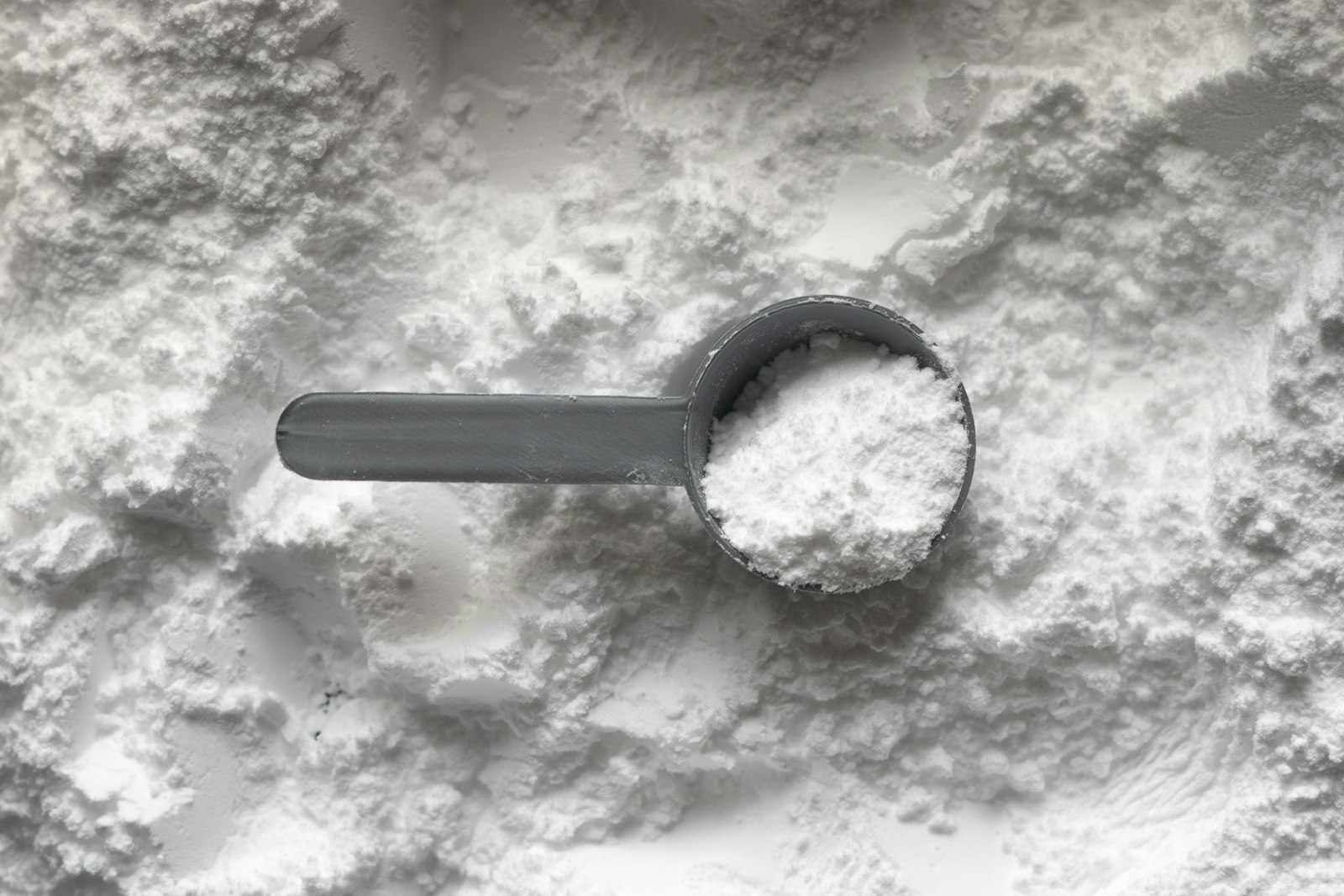
Creatine HCl dissolves approximately 38 times more readily in water than creatine monohydrate. This is the one claim that's unambiguously true and easily observable. Drop a scoop of HCl in water and it vanishes. Drop monohydrate in water and you'll get a slightly gritty suspension that settles to the bottom if you don't drink it quickly.
Thorne's monohydrate is micronized (particle size reduced), which improves mixability substantially compared to non-micronized monohydrate. It dissolves well in 8-10 ounces of water with brief stirring. But HCl still wins the dissolution contest.
Does better solubility mean better absorption? Not necessarily. Solubility in a glass of water and bioavailability in the human digestive system are different things. Your stomach acid, digestive enzymes, and intestinal transport mechanisms handle creatine absorption regardless of how well it dissolved in your shaker bottle. There is no published evidence that HCl's superior solubility translates to meaningfully better uptake in the body.
Winner: Kaged HCl for mixability. No proven advantage for actual absorption.
2. Dosing -- 5 Grams vs. 750 Milligrams
Creatine monohydrate's clinically validated dose is 3-5 grams per day. This is the dose used in the vast majority of studies, and 5 grams has become the standard recommendation. Thorne delivers exactly this in one scoop.
Kaged Creatine HCl recommends 750mg per serving (one scoop), with a daily dose of 750mg to 3 grams depending on body weight and activity level. The smaller dose is marketed as an advantage -- less powder needed, less stomach discomfort, fewer calories (though creatine has essentially zero calories regardless of form).
The theoretical basis for a smaller HCl dose is that higher solubility leads to better absorption, meaning you need less total creatine to achieve muscle saturation. The problem: this theory hasn't been validated in human studies comparing muscle creatine levels after matched supplementation periods with different forms at different doses.
When a 2024 study matched creatine doses between HCl and monohydrate (both groups received equivalent creatine content), there was no difference in outcomes. This suggests that when you control for the amount of actual creatine consumed, the form doesn't matter.
If you take 750mg of creatine HCl per day, you're consuming far less creatine than the 5g daily dose validated across hundreds of studies. Whether 750mg is "enough" for muscle saturation has not been established with the same rigor as the 5g monohydrate dose.
Winner: Monohydrate. The 5g dose is backed by 500+ studies. HCl's lower-dose claims lack equivalent validation.
3. Side Effects -- Stomach Comfort and Water Retention
The two most common complaints about creatine monohydrate are GI discomfort and water retention. Let's address both honestly.
GI Discomfort: At the standard 5g/day maintenance dose, gastrointestinal issues are uncommon. Most reports of stomach upset come from loading protocols (20g/day divided into 4 doses) or from taking creatine on an empty stomach. If you take 5g with food, the vast majority of people have zero issues.
Creatine HCl may cause slightly less GI distress at lower doses simply because... you're taking less total powder. The stomach doesn't care about the form of creatine as much as it cares about the amount dumped into it at once. This advantage, while real for some people, is less about HCl's superiority and more about basic dose-response.
Water Retention: Creatine pulls water into muscle cells (intracellular hydration). This is a feature, not a bug -- it's part of the mechanism that supports muscle protein synthesis. Most people gain 2-4 pounds of water weight in the first 2-3 weeks of creatine monohydrate use, which levels off.
HCl advocates claim their form causes less water retention. There's anecdotal support for this but limited clinical data. If HCl causes less intracellular water retention, it may also be providing less of the volumizing stimulus that contributes to creatine's muscle-building effects. You can't cherry-pick the mechanism.
Winner: Slight edge to HCl for people who genuinely experience GI issues at 5g monohydrate. For most people, it's a non-issue.
4. Third-Party Testing -- Both Strong, One Stronger
Thorne Creatine carries NSF Certified for Sport, the most comprehensive third-party testing program available. This means batch testing for 280+ banned substances, label accuracy verification, contaminant screening (heavy metals, pesticides, microbes), facility audits, and random off-the-shelf testing.
Kaged Creatine HCl carries Informed Sport certification, which is also a respected third-party testing program. Informed Sport tests every batch for banned substances using WADA-accredited laboratories, and it's widely accepted by professional sports organizations globally.
Both certifications put these products in the top tier of supplement quality assurance. The difference is that NSF Certified for Sport includes manufacturing facility audits and random testing that Informed Sport doesn't require. For most people, either certification provides strong assurance. For competitive athletes in strict testing environments, NSF is considered the more rigorous standard.
Winner: Thorne (NSF) by a narrow margin. Both are well above average.
5. Cost-Effectiveness
| Metric | Thorne Monohydrate | Kaged HCl |
|---|---|---|
| Container price | $32 | $35 |
| Servings per container | 90 | 75 |
| Price per serving | $0.36 | $0.47 |
| Creatine per serving | 5,000mg | 750mg |
| Price per gram of creatine | $0.07 | $0.63 |
| Monthly cost (daily use) | $10.80 | $14.10 |
| Annual cost | $129.60 | $169.20 |
On a per-gram-of-creatine basis, monohydrate is roughly 9x cheaper than HCl. Even if you argue that HCl requires a smaller dose (say, 1.5g vs 5g), monohydrate is still 3x more cost-effective.
A 2024 review in PMC concluded that "due to its very high price compared to CrM, [creatine HCl's] use is not economical and it cannot replace CrM."
Winner: Monohydrate, overwhelmingly.
What They Share
Despite marketing that positions them as fundamentally different, creatine monohydrate and HCl share the same core molecule and mechanism:
- Both deliver creatine to your muscles -- the active molecule is identical once absorbed
- Both support ATP regeneration during high-intensity exercise
- Both are safe for long-term use based on available evidence
- Neither requires cycling -- daily use is fine indefinitely
- Both work for men and women across all age groups
- Both are well-tolerated at recommended doses by the vast majority of users
- Both carry third-party certification in the specific products compared here
- Neither is a steroid or has steroid-like effects on hormones
Full Ingredient Breakdown
Thorne Creatine Monohydrate
| Ingredient | Dose | Verdict | Notes |
|---|---|---|---|
| Creatine Monohydrate (Creapure) | 5,000mg | Premium | Branded German source from AlzChem Trostberg GmbH. 99.95%+ purity verified. Matches the clinical dose validated across 500+ studies. |
One ingredient. No fillers, no sweeteners, no flow agents. This is about as clean as a supplement gets.
Kaged Creatine HCl (Unflavored)
| Ingredient | Dose | Verdict | Notes |
|---|---|---|---|
| Creatine Hydrochloride (patented) | 750mg | Neutral | Patented form with 38x solubility vs. monohydrate. Less research than monohydrate. Effective when dosed adequately, but 750mg is below the established clinical range. |
The unflavored version is clean -- just creatine HCl. The flavored versions (Fruit Punch, Lemon Lime) add stevia, natural flavors, malic acid, and citric acid. Nothing harmful, but not the single-ingredient simplicity of Thorne.
Freak Score Comparison
| Criteria | Thorne Monohydrate | Kaged HCl |
|---|---|---|
| Ingredient Quality | 9/10 | 7/10 |
| Dosing | 10/10 | 6/10 |
| Clean Formula | 10/10 | 9/10 (unflavored) |
| Transparency | 9/10 | 8/10 |
| Third-Party Testing | 10/10 | 9/10 |
| Value | 7/10 | 5/10 |
| Source & Manufacturing | 9/10 | 8/10 |
| Overall Freak Score | 9.0/10 | 7.8/10 |
The scoring gap comes primarily from dosing (Thorne delivers the proven 5g clinical dose while Kaged's 750mg per scoop requires multiple scoops to match), value (monohydrate is dramatically cheaper per gram of creatine), and ingredient quality (Creapure is the most documented source in the industry).
Choose Creatine Monohydrate If...
- You want the most-researched form. Over 500 studies. International Society of Sports Nutrition recommended. If evidence-based supplementation matters to you, monohydrate is the only answer with a deep research base.
- You care about cost-effectiveness. At $0.07 per gram of creatine (Thorne), monohydrate is 9x cheaper than HCl per gram. Over a year, the savings add up to roughly $40.
- You're a competitive athlete. Both are certified, but NSF Certified for Sport (Thorne) is the strictest standard available. Pair that with the most-studied form and you have maximum confidence.
- You want simplicity. One scoop, 5 grams, once per day. Done. No calculating multiple scoops or worrying about whether a smaller dose achieves saturation.
- You don't experience GI issues from monohydrate. Most people don't. At 5g/day taken with food, stomach problems are the exception, not the rule.
Choose Creatine HCl If...
- Monohydrate genuinely upsets your stomach. If you've tried micronized monohydrate at 5g/day with food and still get GI distress, HCl's lower-dose approach may solve the problem. But try the basics first -- many "monohydrate intolerance" cases are actually dose/timing issues.
- Solubility matters to you. If you hate gritty drinks and want creatine that vanishes in water, HCl delivers a noticeably smoother mixing experience.
- You prefer flavored options. Kaged's Fruit Punch and Lemon Lime flavors are well-reviewed and make the daily routine more enjoyable. Thorne is unflavored only.
- You're philosophically drawn to newer formulations. HCl may eventually prove to be a meaningful improvement on monohydrate. The early data is promising. But "promising" and "proven" are different words, and the price premium reflects marketing confidence, not scientific certainty.
The Bottom Line
Creatine monohydrate wins this comparison decisively. The research base is not just larger -- it's in a different universe. Over 500 studies validate monohydrate's safety and efficacy. The International Society of Sports Nutrition explicitly recommends it. It costs a fraction of what HCl costs per gram. And when head-to-head studies match the actual creatine dose between forms, they find no meaningful difference in performance outcomes.
Creatine HCl dissolves better in water. That's its real, verified advantage. Everything else -- "better absorption," "no bloating," "no loading needed" -- ranges from weakly supported to directly contradicted by the available evidence. Loading isn't required for monohydrate either. Bloating is rare at the standard dose. And "better absorption" hasn't been demonstrated in human muscle tissue studies.
If you're buying creatine for the first time: buy monohydrate. If you're currently using HCl and it works for you: there's no urgent reason to switch, but you're paying more for an equivalent outcome. If someone tells you HCl is the "upgraded version" of creatine: ask them to cite the studies. You'll be waiting a while.
For a specific product recommendation, Thorne Creatine Monohydrate ($32, 90 servings, NSF Certified for Sport, Creapure-sourced) is one of the best values in the premium creatine category. Read our full Thorne Creatine review for the deep dive.
Where to Buy
Thorne Creatine Monohydrate
- Amazon: ~$32.00 (90 servings) -- Buy on Amazon
- Brand Direct: $32.00 -- Buy from Thorne
- iHerb: ~$32.00 -- Buy on iHerb
Kaged Creatine HCl
- Amazon: ~$29.99 (75 servings) -- Buy on Amazon
- Brand Direct: $34.99 -- Buy from Kaged
- Retail: Walmart, Vitamin Shoppe, GNC
Prices shown may vary. Links may be affiliate links.
FAQ
Is creatine HCl better absorbed than monohydrate?
Creatine HCl is more soluble in water -- approximately 38 times more soluble -- but solubility and bioavailability are different things. No published human study has demonstrated that HCl achieves higher muscle creatine concentrations than monohydrate when both are consumed at adequate doses. A 2022 review in Nutrients found "little evidence that creatine HCl is actually more bioavailable or more effective than creatine monohydrate." Your digestive system handles absorption; the glass of water is just the delivery vehicle.
Do I need a loading phase with creatine monohydrate?
No. Loading (20g/day for 5-7 days) saturates muscle creatine stores faster, but taking 5g/day consistently will reach the same saturation level within 3-4 weeks. Loading is optional and mainly useful if you want results as quickly as possible. Creatine HCl also doesn't require loading, but that's not a differentiator -- neither form requires it.
Can I take both forms together?
You could, but there's no reason to. The active molecule is the same -- creatine. Your muscles don't care whether the creatine arrived via monohydrate or HCl. Taking both would just be a more expensive way to get the same result as taking 5g of monohydrate.
Is there a better third option?
For most people, creatine monohydrate is the best option, period. If you want a premium brand, Thorne (Creapure, NSF Certified) and Momentous (Creapure, NSF Certified) are top picks. If you want budget quality, Nutricost offers a solid monohydrate at roughly $0.15/serving. Other creatine forms (buffered/Kre-Alkalyn, creatine ethyl ester, creatine magnesium chelate) have even less research support than HCl and are generally not recommended over monohydrate by any sports nutrition authority.
Does creatine cause hair loss?
This concern comes from a single 2009 study that found increased levels of DHT (dihydrotestosterone) in rugby players taking creatine monohydrate. The study has never been replicated, and no subsequent research has demonstrated a direct link between creatine supplementation and hair loss. The ISSN's position paper on creatine notes that the current evidence does not support this concern. If you're genetically predisposed to male-pattern baldness, creatine is unlikely to be the determining factor.
Related Reading
- Best Creatine Supplements 2026 -- our full creatine roundup
- Thorne Creatine Review -- deep dive on our top monohydrate pick
- Momentous Creatine Review -- the premium Creapure option
- Best Pre-Workout Supplements 2026 -- pre-workouts that include creatine
- Best Protein Powder 2026 -- complete your supplement stack
Affiliate Disclosure: Freak Naturals may earn a commission on purchases made through links in this article. This does not affect our editorial independence — we recommend products based on research and testing, not commissions.