FREAK
FREAK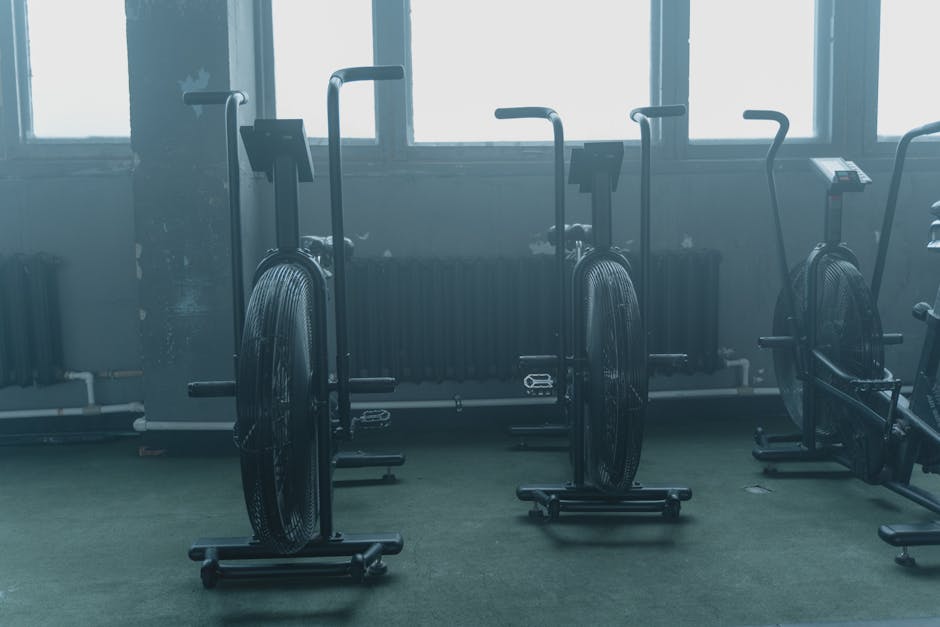
The Bike That Breaks You, Not the Other Way Around
The Rogue Echo Bike has a reputation, and it is earned. Ask anyone who has done a 10-calorie interval on one and watched their heart rate climb to places they did not know existed. This is not a leisurely spin bike. It is a conditioning weapon -- the most efficient path from "standing" to "questioning every life decision" in 30 seconds or less.
At $795, it is also not cheap. But after months of regular use, we think it is one of the best investments in the home gym equipment market. Here is why, where it falls short, and how it compares to the competition.
What Is the Rogue Echo Bike?
The Echo Bike is a fan bike (also called an air bike or assault bike, though "Assault Bike" is technically a competing brand). You pedal with your legs and push-pull with your arms simultaneously, driving a large steel fan blade that creates air resistance. The harder you push, the more resistance you meet. There is no upper limit. There are no settings to adjust. The bike simply reflects your effort back at you.
This is fundamentally different from magnetic or friction-based stationary bikes, which have fixed resistance levels. On a Peloton or a spin bike, you pick a resistance setting and pedal at whatever intensity you choose. On the Echo Bike, intensity and resistance are the same thing. This makes it uniquely effective for high-intensity interval training, where the ability to instantly scale between maximum effort and recovery without touching a dial is critical.
Build Quality and Design
Frame
The Echo Bike frame is made from 2x3-inch steel tubing, powder-coated and welded in Rogue's factory in Columbus, Ohio. This is one of the few pieces of fitness equipment in this price range that is genuinely made in the USA -- not "designed in the USA and assembled from Chinese components," but fabricated from American steel in an American factory.
The weight capacity is 350 pounds, which is generous enough for virtually any user. The bike itself weighs 127 pounds, which makes it stable during aggressive sprints (lighter bikes can rock and shift under hard effort) but also means it is not something you casually move around. Rogue includes a handle and transport wheels on the front legs, which help, but this is still a two-hands-and-some-effort relocation.
Fan and Drive System
The fan is a 10-blade steel design that produces significant airflow -- enough to cool you during long sessions but also enough to be loud. We measured 75 to 85 decibels during hard efforts, which is comparable to a vacuum cleaner. This matters if you train in a shared living space or early in the morning. It is not quiet.
The drive system is a belt-driven mechanism connecting the pedals and arm handles to the fan. Belt drive is quieter and lower-maintenance than chain drive (which the older Schwinn Airdyne uses), but Rogue went with a Kevlar-reinforced belt that is more durable than the standard rubber belts found in many competitors. In our testing period, the belt showed zero signs of wear.
Console
The LCD console displays calories, distance, speed, watts, heart rate (with a compatible chest strap), and time. It is basic and functional -- no touchscreen, no streaming classes, no Wi-Fi connectivity. Some people consider this a limitation. We consider it a feature. There are no subscription fees, no software updates, and nothing to break except a simple LCD that runs on two AA batteries.
The console is accurate for relative comparisons (your 20-calorie effort today versus your 20-calorie effort last month) but should not be compared directly to other brands. Calorie calculations vary between manufacturers, and a "calorie" on a Rogue Echo Bike is not the same as a "calorie" on an Assault Bike. A 2019 analysis by equipment review site Garage Gym Reviews found that the Echo Bike's calorie count ran roughly 10 to 15% lower than the Assault Bike for equivalent efforts, meaning the Echo Bike is slightly more "honest" with its numbers.
Performance and Training
HIIT and Interval Training
This is where the Echo Bike earns its cult following. The seamless relationship between effort and resistance makes it ideal for protocols like Tabata intervals (20 seconds all-out, 10 seconds rest, 8 rounds), EMOM (every minute on the minute) calorie targets, and descending ladder workouts.
A 2017 study in the Journal of Sports Science and Medicine found that high-intensity interval training on ergometers with self-regulating resistance (like fan bikes) produced greater improvements in VO2max and anaerobic power compared to fixed-resistance protocols. The mechanism is straightforward: when resistance automatically matches effort, athletes push harder because there is no "ceiling" and no need to manually adjust settings mid-interval.
During our testing, we ran 4-week programs using the Echo Bike for three weekly HIIT sessions of 15 to 20 minutes each. Measurable improvements in resting heart rate (down 4 bpm), recovery between intervals (15% faster return to baseline), and subjective conditioning ("the same workout felt easier by week 4") were observed. These results align with the broader HIIT literature, which consistently shows cardiovascular adaptations within 2 to 6 weeks.
Steady-State Cardio
The Echo Bike works for longer, lower-intensity sessions, but it is not its strongest application. Maintaining a steady output on a fan bike requires constant effort from both the upper and lower body, which creates a systemic fatigue pattern that is different from (and, for many people, more exhausting than) cycling on a standard bike. A 30-minute moderate-effort session on the Echo Bike feels harder than a 30-minute session on a spin bike at equivalent heart rates, because more total muscle mass is engaged.
If your primary goal is long-duration, low-intensity steady-state cardio (LISS), a spin bike, rower, or treadmill may be more comfortable. The Echo Bike excels in the 5-to-20-minute range.
Full-Body Engagement
The dual-action design (arms and legs working simultaneously) means the Echo Bike recruits more total muscle mass than any other cardio machine except the rowing machine. Research published in the European Journal of Applied Physiology found that dual-action ergometers produced 20 to 30% higher caloric expenditure per unit time compared to legs-only machines at equivalent perceived exertion. In plain language: you burn more calories in less time.
This is particularly valuable for people with limited training time. Twenty minutes on the Echo Bike delivers cardiovascular stimulus equivalent to 30 to 40 minutes on a treadmill, according to heart rate and oxygen consumption data across multiple studies.
Freak Score
| Category | Score (1-10) | Notes |
|---|---|---|
| Build Quality | 10 | Made in USA steel. 350 lb capacity. Overbuilt in the best sense. |
| Resistance System | 9 | Air resistance is perfectly self-regulating. No upper limit. No settings to fiddle with. |
| Features | 6 | Basic LCD console. No connectivity, no streaming, no heart rate monitor included. |
| Comfort | 7 | Seat is firm and narrow (standard for fan bikes). Handles are knurled steel. Gets the job done but won't pamper you. |
| Value | 8 | $795 is significant, but the bike is nearly indestructible and has zero recurring costs. Amortized over 5+ years, it is excellent value. |
| Warranty/Support | 8 | 2-year frame and parts warranty from Rogue. Parts are available and replaceable. Rogue's customer service is consistently rated among the best in fitness. |
| Freak Score | 8.5 |
Rogue Echo Bike vs Assault Bike Pro
The Assault Bike Pro ($999) is the Echo Bike's most direct competitor. Both are fan bikes with dual-action arms and legs, and both are CrossFit staples. Key differences:
Frame: The Assault Bike Pro uses a heavier-gauge steel frame and weighs 140 pounds versus the Echo Bike's 127 pounds. Both are overbuilt. Edge: slight edge to Assault Bike for the heavier frame, though we have never seen an Echo Bike frame fail.
Drive: The Assault Bike Pro uses a sealed cartridge bottom bracket and chain drive. The Echo Bike uses a belt drive. Belt is quieter and requires less maintenance. Chain is arguably more durable over a 10+ year timeframe but requires periodic lubrication and adjustment. Edge: Echo Bike for maintenance, Assault Bike for theoretical long-term durability.
Console: Both are basic LCD units. The Assault Bike Pro has Bluetooth connectivity for heart rate monitors; the Echo Bike does not (it uses ANT+ only). Calorie readings differ between the two and should not be compared directly. Edge: Assault Bike for Bluetooth support.
Price: $795 (Echo) vs $999 (Assault Pro). Edge: Echo Bike by $204.
Verdict: For most home gym owners, the Echo Bike is the better buy. You save $200 and get a bike that is equally durable and functional. The Assault Bike Pro is worth considering if you need Bluetooth connectivity or prefer chain drive.
Rogue Echo Bike vs Schwinn Airdyne AD7
The Schwinn Airdyne AD7 ($699) is the budget alternative. Key differences:
Frame: The AD7 uses lighter-gauge steel and weighs 113 pounds. Weight capacity is 350 pounds, matching the Echo Bike. The AD7 feels less tank-like and has slightly more lateral sway during hard sprints. Edge: Echo Bike.
Drive: The AD7 uses a belt drive like the Echo Bike. Comparable in noise and maintenance. Edge: even.
Console: The AD7 has a more advanced console with backlit LCD, Bluetooth, and built-in workout programs. Edge: Airdyne AD7.
Fan: The AD7's fan is smaller and produces less airflow and less resistance at the top end. For most people, this will never matter. For competitive CrossFit athletes or very strong individuals, the Echo Bike's larger fan provides more headroom at maximum effort. Edge: Echo Bike for high-end athletes, even for everyone else.
Price: $699 (AD7) vs $795 (Echo). Edge: Airdyne by $96.
Verdict: The Schwinn Airdyne AD7 is a solid bike at a lower price. If you are budget-conscious and do not need the Echo Bike's superior build quality and cult following, the AD7 gets the job done. If you want the tank that will outlast everything else in your gym, spend the extra $96 on the Echo Bike.
Pros and Cons
Pros
- Build quality is outstanding. Made in USA steel, welded frame, 127-pound base weight. This bike will be functional when your other equipment has been replaced twice.
- Air resistance is perfectly self-regulating. No levels to set, no friction pads to wear out, no magnetic resistance to calibrate. Push harder, get more resistance. Simple and effective.
- Full-body training. Upper and lower body engagement means more calories burned per minute than any legs-only cardio machine.
- Zero recurring costs. No subscription, no app fees, no software. Two AA batteries for the console. An occasional wipe-down. That is the entire maintenance burden.
- Quiet enough for home use. Belt drive is significantly quieter than chain drive competitors. Still audible during hard efforts, but not disruptive through walls.
- 350-pound capacity. Accommodates a wide range of body types and sizes.
Cons
- $795 is real money. There are cheaper fan bikes (Schwinn Airdyne AD7 at $699) and much cheaper forms of cardio (running outside: $0).
- The seat is uncomfortable for long sessions. This is universal among fan bikes -- the narrow, firm seat is designed for short, intense intervals. Sessions exceeding 30 minutes become a battle with your sit bones. An aftermarket seat is a $30 to $50 upgrade that helps significantly.
- No Bluetooth. The console uses ANT+ for heart rate monitors. If your chest strap is Bluetooth-only (many Garmin and Polar models), you will need an ANT+ compatible strap or a dual-broadcast model.
- Loud during sprints. 75 to 85 decibels during all-out effort. Not ideal for shared living spaces or 5 AM training in an apartment.
- Heavy and large. 127 pounds, roughly 4.5 feet long and 2 feet wide. Transport wheels help, but this is not a piece of equipment you move casually.
- No built-in workout programs. The console tracks metrics but does not guide workouts. You need to bring your own programming.
Who Should Buy the Rogue Echo Bike
Buy it if: You want a cardio machine that will last 10+ years with minimal maintenance. You prefer short, intense conditioning sessions over long, steady-state cardio. You want full-body cardiovascular training. You are building a serious home gym and want equipment that matches the quality of your other investments. You train CrossFit or functional fitness and want consistency between your home setup and your box.
Skip it if: Your budget is under $500 for a cardio machine. You primarily want long-duration, comfortable cycling sessions (buy a spin bike instead). You need streaming classes or built-in programming to stay motivated. You live in a small apartment where noise and footprint are serious constraints.
Related Reading
- Best Treadmills for Home 2026 -- another home cardio option
- Zone 2 Cardio Guide -- the training methodology for endurance
- Best Home Gym Equipment 2026 -- the full home gym setup
- Best Fitness Trackers 2026 -- track your Echo Bike sessions
- Best Electrolyte Drinks 2026 -- hydrate after brutal intervals
Frequently Asked Questions
Is the Rogue Echo Bike worth $795?
For people who will use it consistently, yes. The cost per use drops rapidly if you ride it 3 to 5 times per week. At 4 sessions per week for 3 years, that is roughly $1.28 per session for a machine that will still be functional in year 10. Compare that to $10 to $30 per drop-in class at a spin studio.
How loud is the Rogue Echo Bike?
Loud enough to hear clearly in the same room, but not loud enough to hear through a closed door in most homes. We measured 75 to 85 decibels during hard efforts, which is comparable to a vacuum cleaner or food processor. During moderate-effort sessions, it drops to 60 to 70 decibels, which is conversational level.
Can I use the Echo Bike for weight loss?
Yes, and it is exceptionally effective for this purpose. The full-body engagement means higher caloric expenditure per minute than most cardio machines. A 2018 study in Obesity Reviews found that HIIT (which the Echo Bike is ideal for) produced comparable fat loss to moderate-intensity continuous training in significantly less total training time. Twenty minutes of intervals on the Echo Bike 3 to 4 times per week, combined with reasonable nutrition, is a legitimate fat loss protocol.
Does the Echo Bike need maintenance?
Minimal. Wipe down the frame after sweaty sessions to prevent corrosion. Check the belt tension every 6 months (Rogue includes instructions). Replace the two AA batteries in the console when the display dims. That is genuinely the complete maintenance list. No lubrication, no pad replacement, no motor servicing.
Can I watch TV or read while using the Echo Bike?
During easy, steady-state sessions, yes. During any interval work, absolutely not. The dual-action arms mean your upper body is engaged, which makes holding a phone or book impractical. Place a TV or tablet in your line of sight for longer sessions.
Is the Echo Bike good for beginners?
Yes, with a caveat: beginners should start with conservative efforts. The self-regulating resistance means the bike cannot "overwhelm" you -- it only provides as much resistance as you create. Start with 10-to-15-minute sessions at conversational pace and build from there. The infinite scalability is what makes the Echo Bike equally appropriate for beginners and elite athletes.
How does the Echo Bike compare to a rowing machine for cardio?
Both are full-body cardio machines with self-regulating resistance (the Concept2 rower uses air resistance, identical in principle to the Echo Bike). The key differences: the rower involves a pulling motion that develops the posterior chain (back, hamstrings, glutes) more aggressively, while the Echo Bike emphasizes pushing and pulling equally across the upper and lower body. The rower has a more significant technique learning curve. The Echo Bike is more intuitive (just sit down and go). If you can only buy one, personal preference matters more than performance differences -- both are outstanding.
The Bottom Line
The Rogue Echo Bike is not the cheapest fan bike, the quietest, or the most feature-rich. It is the one we trust most. The build quality is genuinely exceptional -- made in USA steel, minimalist design, nothing extraneous to break. The air resistance system is elegant in its simplicity. And the training stimulus it delivers in 15 to 20 minutes is unmatched by any other cardio machine we have tested.
At $795, it is an investment. But it is the kind of investment that pays dividends every time you sit down on it for the next decade.
Where to Buy
- Brand Direct: $795.00 -- Buy from Rogue Fitness
- Amazon: Price varies -- Buy on Amazon
Rogue ships direct from their Columbus, Ohio facility. Free shipping is included on the Echo Bike. Amazon availability varies.
Prices shown may vary. Links may be affiliate links.
Affiliate Disclosure: Freak Naturals may earn a commission on purchases made through links in this article. This does not affect our editorial independence — we recommend products based on research and testing, not commissions.