FREAK
FREAK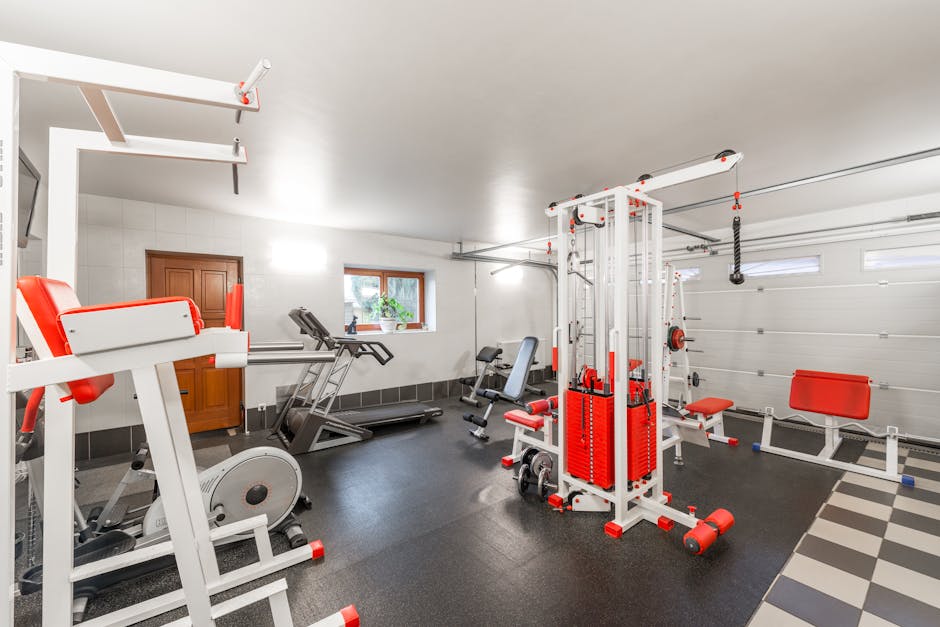
The Home Gym Has Won
The debate is over. A well-built home gym beats a commercial gym membership for most people, and the data backs it up.
A 2023 study in the International Journal of Environmental Research and Public Health found that home exercisers maintained higher workout consistency over 12 months compared to gym-only exercisers. The reason is obvious to anyone who has ever talked themselves out of a 6 AM gym commute in January: removing barriers increases adherence. And adherence is the only variable that actually matters for long-term results.
The average commercial gym membership runs $40 to $60 per month. That is $480 to $720 per year, not counting initiation fees, parking, gas, and the 45 minutes of round-trip commute time you will never get back. Within two to three years, a properly outfitted home gym pays for itself -- and it never closes, never has a wait for the squat rack, and never plays music you did not choose.
But here is where most people go wrong: they either overbuy (dropping $5,000 on equipment they barely use) or underbuy (grabbing a set of 10-pound dumbbells and wondering why they are not making progress). The sweet spot is a handful of versatile, high-quality pieces that cover the fundamental movement patterns.
The Five Essentials (And Why These Five)
Every effective training program revolves around a few basic movement patterns: pushing, pulling, hinging, squatting, and conditioning. You do not need 30 machines to cover these. You need five categories of equipment, and you need to buy smart within each one.
Here is what we recommend after testing dozens of products across every price point.
1. Adjustable Dumbbells: Bowflex SelectTech 552
Price: $379 | Weight Range: 5 to 52.5 lbs per hand | Increments: 2.5 lbs (up to 25 lbs), then 5 lbs
If you buy one piece of home gym equipment, make it a pair of adjustable dumbbells. They cover more exercises than any other single tool -- presses, rows, curls, lunges, shoulder work, and dozens more.
The Bowflex SelectTech 552 remains the gold standard for a reason. The dial mechanism lets you change weight in under two seconds. The 2.5-pound increments below 25 pounds are a genuine advantage over competitors that only offer 5-pound jumps, especially for isolation exercises like lateral raises where small jumps matter. Each dumbbell replaces 15 individual sets, which means you are replacing roughly $2,000 worth of traditional dumbbells and the rack to hold them.
A 2019 study in the Journal of Strength and Conditioning Research confirmed what experienced lifters already know: dumbbell training produces similar strength and hypertrophy gains to barbell training for most exercises, with the added benefit of addressing bilateral strength imbalances. For a home gym without a full barbell setup, adjustable dumbbells cover the vast majority of your training needs.
The main caveat with the SelectTech 552s is that the plastic dial mechanism demands reasonable care. Drop them from height or slam them, and you risk cracking the housing. Treat them with basic respect and they will last years. We know people running the same pair since 2019 without issues.
2. Pull-Up Bar: Iron Age Doorway Bar
Price: $29.99 | Capacity: 300 lbs | Grip Positions: 3
The pull-up is the single best upper-body pulling exercise, and a doorway pull-up bar is the cheapest piece of serious training equipment you will ever buy.
The Iron Age bar costs under $30, holds up to 300 pounds, offers three grip positions (wide, narrow, neutral), and installs in seconds without screws or permanent mounting. It also comes with a lifetime warranty, which at this price point is practically unheard of.
Research published in the Journal of Electromyography and Kinesiology demonstrated that pull-ups and chin-ups activate the latissimus dorsi, biceps, and posterior deltoids more effectively than lat pulldown machines at equivalent loads. Translation: the $30 bar on your doorframe is more effective than the $3,000 machine at your gym.
Beyond standard pull-ups and chin-ups, a doorway bar enables hanging leg raises (one of the best core exercises according to EMG data), dead hangs for grip strength and shoulder health, and band-assisted variations for beginners working toward their first rep.
3. Resistance Bands: WODFitters Set
Price: $49.97 | Levels: 5 bands, 10 to 125 lbs combined | Material: Natural latex
Resistance bands are the most underrated piece of equipment in any gym, commercial or home. They provide accommodating resistance (the load increases as the band stretches, matching your natural strength curve), they are effectively weightless for storage and travel, and they fill gaps that free weights cannot.
The WODFitters set includes five bands covering 10 to 125 pounds of resistance. Natural latex construction means they will outlast cheaper TPE alternatives by years -- TPE bands lose elasticity and snap under load far sooner than natural latex, according to material durability testing by the Rubber Manufacturers Association.
Use them for band-assisted pull-ups while building strength, banded hip thrusts and glute activation work, face pulls and band pull-aparts for shoulder health, warm-up protocols before heavy lifting, and standalone training when traveling or short on time.
A 2019 systematic review in SAGE Open Medicine found that resistance band training produced comparable strength gains to conventional resistance training in both untrained and trained individuals. They are not a downgrade -- they are a different tool with legitimate applications.
4. Adjustable Kettlebell: REP Fitness Adjustable
Price: $159.99 | Weight Range: 5 to 40 lbs | Increments: 5 lbs
Kettlebells occupy a unique niche that dumbbells cannot fully replicate. The offset center of gravity and handle design make them superior for ballistic movements like swings, cleans, and snatches -- exercises that build explosive power, cardiovascular conditioning, and posterior chain strength simultaneously.
A landmark 2012 study in the Journal of Strength and Conditioning Research found that a 12-week kettlebell training program increased participants' vertical jump, strength, and VO2max. Very few training modalities improve both strength and aerobic capacity at the same time.
The REP Fitness adjustable kettlebell solves the biggest problem with kettlebell training at home: you normally need multiple kettlebells as you get stronger. This one adjusts from 5 to 40 pounds in 5-pound increments, replacing eight individual kettlebells. The adjustment mechanism is a simple weight plate system inside the bell -- pop the pin, add or remove plates, replace the pin. Takes about 10 seconds.
At $159.99 direct from REP Fitness, it costs less than buying even two or three individual kettlebells of different weights.
5. Cardio: Rogue Echo Bike
Price: $795 | Resistance: Air (unlimited) | Frame: Made in USA steel | Capacity: 350 lbs
If your budget allows for a cardio machine, the Rogue Echo Bike is the one we keep coming back to. Air resistance means the harder you push, the harder it pushes back -- there is no upper ceiling, which makes it equally effective for a 130-pound beginner and a 250-pound athlete.
The Echo Bike has become the standard in CrossFit boxes and serious home gyms because it is virtually indestructible. The frame is welded steel, made in Columbus, Ohio. The fan and drive mechanism are dead simple -- no electronics to fail, no belts to replace, no motors to burn out. People have logged thousands of hours on these with nothing more than an occasional chain lube.
Research on air resistance bikes specifically is limited, but a 2014 study in the Journal of Strength and Conditioning Research found that high-intensity interval training on fan bikes produced significant improvements in both aerobic and anaerobic capacity over 4 weeks. The dual-action (arms and legs) design means higher caloric expenditure per minute compared to legs-only machines like treadmills and stationary bikes.
At $795, it is not cheap. But consider that a commercial gym-quality treadmill costs $2,000 to $4,000 and has a motor that will eventually need servicing. The Echo Bike will outlast most treadmills by a decade.
Budget Tiers: What to Buy at Every Price Point
The $100 Setup
- Iron Age Pull-Up Bar -- $29.99
- WODFitters Resistance Bands -- $49.97
- Total: $79.96 (plus a yoga mat and you are under $100)
This covers pushing (band presses, push-ups), pulling (pull-ups, band rows), hinging (band deadlifts, band good mornings), squatting (band squats, bodyweight squats), and conditioning (band circuits, bodyweight HIIT). It is legitimately enough to build an impressive physique if you train hard and progressively, especially for beginners and intermediates.
The $500 Setup
- Bowflex SelectTech 552 -- $379
- Iron Age Pull-Up Bar -- $29.99
- WODFitters Resistance Bands -- $49.97
- Total: $458.96
This is the sweet spot for most people. Adjustable dumbbells unlock hundreds of exercises with real progressive overload potential. Combined with a pull-up bar and bands, you can run virtually any hypertrophy or strength program designed for a commercial gym. You will need a bench eventually (a flat/incline bench runs $100 to $200), but you can start with floor presses and use a sturdy chair for step-ups.
The $2,000 Setup
- Bowflex SelectTech 552 -- $379
- Iron Age Pull-Up Bar -- $29.99
- WODFitters Resistance Bands -- $49.97
- REP Fitness Adjustable Kettlebell -- $159.99
- Rogue Echo Bike -- $795
- Adjustable bench -- ~$200
- Stall mat flooring -- ~$100
- Total: ~$1,714
This is a complete home gym that rivals any commercial facility for general fitness, hypertrophy, and conditioning. The only things it does not cover are heavy barbell work (squats, deadlifts, bench press above 52.5 lbs per hand) and specialized machines. For most people, this setup is more than enough for years of progress.
What to Buy First
If you are starting from zero, buy in this order:
- Pull-up bar and resistance bands ($80 total). These give you the most exercise variety per dollar. You can train your entire body on day one.
- Adjustable dumbbells ($379). This is the biggest upgrade. Real progressive overload, hundreds of exercises, compact footprint.
- Adjustable kettlebell ($160). Adds ballistic training, conditioning work, and posterior chain emphasis that dumbbells handle less efficiently.
- Cardio machine ($795). Only if you want dedicated indoor cardio. Running outside is free, and high-rep kettlebell swings are brutal conditioning on their own.
Comparison Table
| Equipment | Price | Space Needed | Exercises Covered | Best For |
|---|---|---|---|---|
| Bowflex SelectTech 552 | $379 | 2 sq ft | 50+ | Pressing, rowing, isolation work |
| Iron Age Pull-Up Bar | $29.99 | Doorframe | 8-10 | Upper body pulling, core |
| WODFitters Resistance Bands | $49.97 | Drawer | 40+ | Warm-up, accessory, travel |
| REP Fitness Adjustable Kettlebell | $159.99 | 1 sq ft | 20+ | Ballistic training, conditioning |
| Rogue Echo Bike | $795 | 10 sq ft | Cardio only | HIIT, LISS, active recovery |
Common Mistakes to Avoid
Buying a treadmill first. Cardio equipment should be your last purchase, not your first. You can run outside for free. You cannot replicate heavy dumbbell presses without dumbbells.
Choosing the cheapest option in every category. There is a difference between value and cheapness. A $15 pair of adjustable dumbbells from a no-name brand will wobble, rust, and limit your weight range. The Bowflex SelectTech costs more upfront but replaces $2,000 worth of equipment and lasts years.
Overbuying on day one. You do not need a full power rack, barbell set, cable machine, and leg press on day one. Start with the essentials, train for six months, and then buy based on what you actually need -- not what looks cool on Instagram.
Ignoring flooring. If you are training on hardwood or tile, a $50 to $100 investment in stall mats or rubber flooring protects your floors, reduces noise, and gives you a stable surface for standing exercises. This is especially important if you live in an apartment.
Skipping the pull-up bar. It is $30. It covers the one movement pattern (vertical pulling) that is genuinely difficult to replicate without dedicated equipment. There is no good excuse to skip it.
Related Reading
- Best Adjustable Dumbbells 2026 -- the essential home gym investment
- Best Pull-Up Bars 2026 -- the cheapest vertical pulling solution
- Best Resistance Bands 2026 -- the most versatile portable equipment
- Best Treadmills for Home 2026 -- cardio at home
- Best Online Personal Trainer Platforms 2026 -- programming for your home gym
- Best Jump Ropes 2026 -- the most underrated home cardio tool
Frequently Asked Questions
Can you really get a good workout with home gym equipment?
Yes, and the research supports it. A 2022 meta-analysis in Sports Medicine found no significant difference in strength or hypertrophy outcomes between home-based and gym-based resistance training when training volume and intensity were equated. The equipment matters less than the effort.
How much space do I need for a home gym?
A 6-by-6-foot area is enough for a complete setup minus a cardio machine. Add the Rogue Echo Bike and you need roughly 6 by 10 feet. A single-car garage, spare bedroom, or large closet works. The beauty of adjustable equipment is the compact footprint.
Are adjustable dumbbells as good as regular dumbbells?
For training purposes, there is no meaningful difference. The weight is the weight regardless of whether it comes from a fixed cast-iron dumbbell or an adjustable mechanism. The only practical difference is that adjustable dumbbells should not be dropped from height, while many fixed dumbbells can handle drops. If you are not routinely dropping dumbbells (and in most home gym scenarios, you should not be), adjustable is the smarter buy.
What about a barbell and squat rack?
A barbell and rack setup is excellent but not essential for most people. It requires more space (at least 8 by 8 feet), more investment ($500 to $1,500 for a decent rack, barbell, and plates), and creates a higher barrier to entry. If your primary goals are general fitness, aesthetics, and functional strength, adjustable dumbbells and a kettlebell cover the vast majority of what a barbell does. If your goals are powerlifting or maximal strength, then yes, eventually you will want a barbell setup.
How long will this equipment last?
All five of our recommended products are built to last 5 to 10 years minimum with normal use. The Rogue Echo Bike and Iron Age Pull-Up Bar (with its lifetime warranty) will likely outlast everything else in your home. The Bowflex SelectTech dumbbells are the most maintenance-sensitive item on the list -- treat the dial mechanism gently and they will serve you for years.
Is it cheaper than a gym membership?
Almost always, yes. The $500 setup (dumbbells, pull-up bar, bands) pays for itself in 8 to 12 months compared to a typical gym membership. The $2,000 setup pays for itself in 3 to 4 years. After that, you are training for free with equipment you own. There are no monthly fees, no annual increases, and no cancellation hassles.
What about cardio without a machine?
Jump rope ($10 to $20), outdoor running (free), kettlebell circuits (covered if you buy the REP Fitness kettlebell), bodyweight HIIT (burpees, mountain climbers, jumping lunges), and resistance band circuits all provide effective cardiovascular training without a dedicated machine. The Rogue Echo Bike is a luxury, not a necessity.
The Bottom Line
Building a home gym is not about replicating a commercial facility. It is about assembling a small collection of versatile, high-quality tools that let you train consistently, progressively, and without excuses. Start with a pull-up bar and bands for under $100. Add adjustable dumbbells when your budget allows. Fill in from there based on your actual training needs, not marketing hype.
The best gym is the one you actually use. For most people, that is the one in the next room.
Affiliate Disclosure: Freak Naturals may earn a commission on purchases made through links in this article. This does not affect our editorial independence — we recommend products based on research and testing, not commissions.