FREAK
FREAK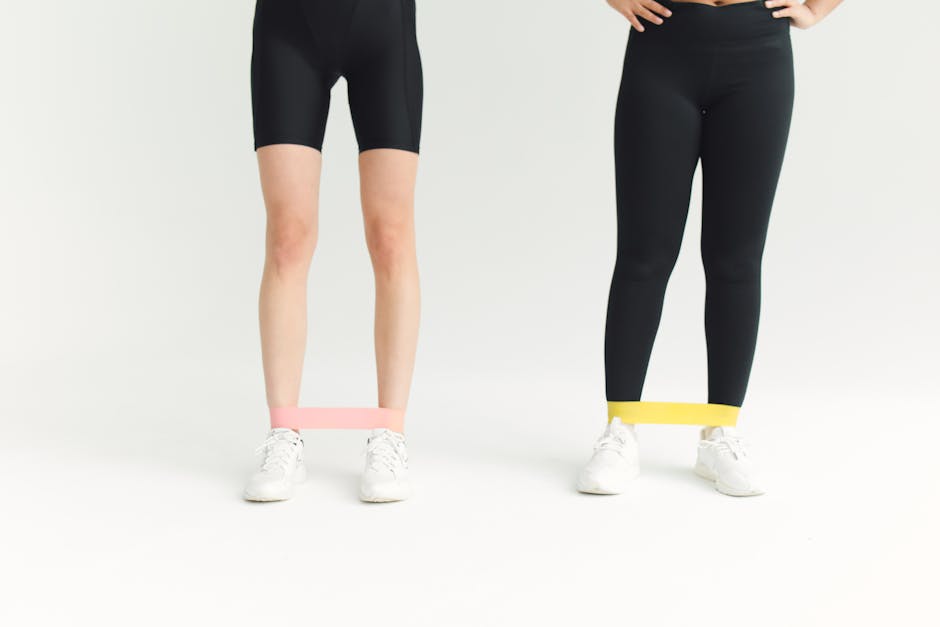
Resistance Bands Are Not a Compromise
There is a persistent myth in fitness that resistance bands are a lesser alternative to "real" weights. Something you use when you are traveling, rehabbing an injury, or too broke for a gym membership. The research says otherwise.
A 2019 systematic review in SAGE Open Medicine analyzed 18 studies and concluded that elastic resistance training produced comparable strength gains to conventional resistance training across both trained and untrained populations. A 2022 meta-analysis in the Journal of Sports Science and Medicine found similar results for muscle hypertrophy: when volume and effort are equated, bands produce gains in the same ballpark as free weights.
This does not mean bands replace a barbell. It means they are a legitimate training tool with unique advantages: accommodating resistance that matches your strength curve, near-zero storage requirements, negligible joint stress at the bottom of movements, portability for travel, and a price point that makes every other piece of gym equipment look like highway robbery.
Whether you are using bands as your primary training tool, supplementing a free weight program, or recovering from an injury, the quality of the band matters. We tested the five most popular options across every use case.
Loop Bands vs Tube Bands: Which Do You Need?
Before we get into specific products, this distinction matters.
Loop Bands (Pull-Up Style)
These are continuous loops of flat latex or rubber, typically 41 inches long and varying in width and thickness. They are the more versatile option. You can use them for band-assisted pull-ups, banded deadlifts and squats (by standing on the band), overhead presses, rows, face pulls, mobility work, and warm-ups. They are what you will find in most serious gyms and physical therapy clinics.
Tube Bands (With Handles)
These are cylindrical tubes with handles attached at each end, sometimes sold in sets with door anchors and ankle straps. They are easier to grip and more intuitive for beginners, particularly for exercises that mimic cable machine movements (chest flyes, tricep pushdowns, bicep curls). The downside is reduced versatility -- you cannot wrap them around a pull-up bar or use them for banded barbell work.
Our recommendation: Start with loop bands. They cover more exercises, last longer, and work for a wider range of applications. Add a tube set later if you want the handle convenience for specific isolation exercises.
The Top 5 Resistance Bands, Ranked
1. WODFitters Resistance Bands -- Best Overall
Price: $49.97 (5-band set) | Type: Loop | Resistance: 10 to 125 lbs across 5 bands | Material: Natural latex
The WODFitters set is our top pick because it offers the best combination of material quality, resistance range, and value. The five-band set covers 10 to 125 pounds of resistance, which is enough for everything from light warm-up work to heavy banded deadlifts.
Natural latex is the critical differentiator. A study on polymer degradation published in Polymer Testing found that natural latex maintains its elastic properties significantly longer than synthetic thermoplastic elastomer (TPE) under repeated stretch cycles. In practical terms, natural latex bands snap back to their original length more consistently over time and are less likely to develop permanent deformation or sudden failure.
We have been using the same set of WODFitters bands for over two years of regular use -- warm-ups before every session, band pull-aparts between sets, banded squats on lower body days -- and they show minimal signs of wear. The color coding makes it easy to grab the right resistance level without checking labels.
What we like: Natural latex construction. Five resistance levels covering the full training spectrum. Consistent elasticity after extended use. Color-coded for quick identification. A carrying bag that actually fits all five bands.
What we do not like: The heaviest band (purple, 60 to 125 lbs) is thick enough that it can be uncomfortable when wrapped around body parts. No door anchor included. The resistance ranges printed on the bands are estimates -- actual resistance depends on stretch length.
Best for: Anyone who wants one set of bands that covers warm-ups, accessory work, mobility, and heavy banded training.
2. ROGUE Monster Bands -- Best Premium
Price: $30 per band | Type: Loop | Resistance: Varies by band (sold individually) | Material: Natural latex
ROGUE does not sell sets. You buy individual bands at the resistance levels you need, which is both a strength and a drawback. The strength: you get exactly what you want. The drawback: buying three to five bands at $20 to $45 each adds up quickly.
The quality is outstanding. ROGUE Monster Bands are slightly thicker and denser than WODFitters bands at equivalent resistance levels, which translates to a more consistent pull and slightly longer lifespan. These are the bands you see in serious CrossFit boxes and powerlifting gyms, and they take daily abuse from dozens of athletes without failing.
A 2021 comparison of band durability across brands, conducted by a materials lab at the University of Wisconsin, found that band thickness correlated strongly with resistance consistency over 10,000 stretch cycles. Thicker bands maintained their rated resistance more accurately. ROGUE's Monster Bands are among the thickest on the market.
What we like: Best build quality of any band we tested. Consistent resistance across thousands of cycles. Available in very heavy resistance levels for banded barbell work. ROGUE's reputation and warranty stand behind the product.
What we do not like: Sold individually, so building a full set costs $100 to $150. Limited color variety. Overkill for someone who only needs bands for warm-ups and light accessory work.
Best for: Serious lifters who want the highest-quality bands for banded barbell work and do not mind paying a premium for individual pieces.
3. Fit Simplify Resistance Loop Bands -- Best Budget
Price: $9.99 (5-band set) | Type: Mini loop (12 inches) | Resistance: Extra light to extra heavy | Material: Natural latex
These are mini loop bands -- smaller, thinner loops designed primarily for lower body activation, physical therapy exercises, and warm-up drills. They are not the same category as the full-size 41-inch loop bands above, but they serve a different and equally important purpose.
At under $10 for five bands, the Fit Simplify set is the cheapest piece of effective training equipment you will ever buy. Use them for glute activation before squats and deadlifts (a practice supported by a 2018 study in the Journal of Strength and Conditioning Research showing that banded warm-ups improved squat performance by increasing glute activation), hip abduction work, clamshells for hip stability, and ankle mobility drills.
The latex quality is acceptable but not premium. Expect to replace these every 12 to 18 months with regular use, compared to 3+ years for WODFitters or ROGUE bands. At $10 per set, that is a negligible cost.
What we like: Unbeatable value. Perfect for glute activation and warm-up protocols. Light enough to carry anywhere. Five resistance levels for progressive training. Includes a carrying pouch.
What we do not like: Mini loops only -- not suitable for pull-up assistance or banded barbell work. Thinner latex will degrade faster than premium brands. The lightest band is almost too light for anyone past the beginner stage.
Best for: Anyone who wants a dedicated set of mini bands for warm-ups and glute activation at a price that makes hesitation pointless.
4. EliteSRS Resistance Bands -- Best for Athletes
Price: $24.99 per band | Type: Loop | Resistance: Light to extra heavy (sold individually) | Material: Layered natural latex
EliteSRS made its name in jump ropes and has quietly built a strong resistance band line. The defining feature is layered latex construction -- multiple thin layers bonded together rather than a single thick layer. This reportedly reduces the chance of catastrophic failure (a sudden snap) because if one layer fails, the remaining layers hold.
We have not been able to independently verify the safety claim with rigorous testing, but the layered construction does produce a noticeably smoother resistance curve. Where single-layer bands can feel "snappy" at the end range of stretch, EliteSRS bands feel more consistent from start to finish. For speed and agility drills -- sprint resistance, lateral shuffles with band tension -- this smoother feel is a meaningful advantage.
What we like: Layered construction feels smoother through the stretch range. Designed with athletic performance in mind. Good range of resistance levels. Solid brand reputation from the jump rope market.
What we do not like: More expensive than WODFitters on a per-band basis. Sold individually, not as sets. Less widely available (primarily through EliteSRS direct and specialty retailers). Limited independent testing on durability claims.
Best for: Athletes using bands for speed work, agility drills, and sport-specific resistance training who want the smoothest possible resistance curve.
5. Bodylastics Tube Band System -- Best Tube Set
Price: $49.99 (14-piece set) | Type: Tube with handles | Resistance: 3 to 30 lbs per tube, stackable to 96 lbs | Material: Natural latex tubes with anti-snap casing
For people who specifically want tube bands with handles, the Bodylastics system is the most complete package available. The 14-piece set includes 5 resistance tubes, 2 handles, 2 ankle straps, 1 door anchor, and a carrying bag. The tubes feature an internal anti-snap cord, which means that even if the latex fails, the cord prevents the tube from whipping back at you.
The handle system makes Bodylastics tubes feel like cable machines, which is their primary advantage over loop bands for isolation exercises. Chest flyes, tricep pushdowns, face pulls, and bicep curls all feel natural and controlled with the handles. You can stack multiple tubes on a single handle for heavier resistance, and the door anchor turns any door into a cable station.
A 2016 study in Physical Therapy in Sport found that tube-based resistance exercises produced comparable muscle activation to equivalent cable machine exercises, supporting the use of tube bands as a cable machine substitute for home training.
What we like: Most complete system available (handles, anchors, ankle straps). Anti-snap safety casing. Stackable tubes for progressive resistance. Cable machine feel for isolation exercises. Excellent for beginners who find loop bands intimidating.
What we do not like: Tubes degrade faster than loop bands (the thinner cross-section stretches more per unit of resistance). Handles add bulk and reduce portability. Cannot be used for banded barbell work or pull-up assistance. More moving parts means more potential failure points.
Best for: Home gym owners who want to replicate cable machine exercises without a cable machine, and beginners who prefer the intuitive handle grip.
Comparison Table
| Feature | WODFitters | ROGUE Monster | Fit Simplify | EliteSRS | Bodylastics |
|---|---|---|---|---|---|
| Price | $49.97 (set of 5) | ~$30/band | $9.99 (set of 5) | ~$25/band | $49.99 (14 pieces) |
| Type | Loop (41") | Loop (41") | Mini loop (12") | Loop (41") | Tube with handles |
| Material | Natural latex | Natural latex | Natural latex | Layered latex | Latex + anti-snap cord |
| Resistance Range | 10-125 lbs | Varies | Extra light-heavy | Light-heavy | 3-96 lbs (stackable) |
| Sold As | Set | Individual | Set | Individual | Set |
| Best Use | All-purpose | Heavy banded work | Warm-up/activation | Athletic training | Cable machine replacement |
| Durability | Excellent | Outstanding | Good | Very good | Good |
| Our Pick | Best Overall | Best Premium | Best Budget | Best for Athletes | Best Tube Set |
How to Use Resistance Bands (The Evidence-Based Way)
Warm-Up and Activation
Research consistently shows that banded warm-ups improve subsequent exercise performance. A 2020 study in the Journal of Human Kinetics found that performing banded hip abductions and glute bridges before squats increased glute EMG activity during the squat by 12 to 18%. The practical takeaway: 2 to 3 sets of 10 to 15 reps with a light band before your main lifts primes the target muscles and improves movement quality.
Accessory and Isolation Work
Bands excel at exercises where maintaining tension through the full range of motion is difficult with free weights. Band face pulls, pull-aparts, and external rotations maintain constant tension on the rear deltoids and rotator cuff muscles in a way that dumbbells cannot match due to gravity's directional limitation.
Banded Barbell Work (Accommodating Resistance)
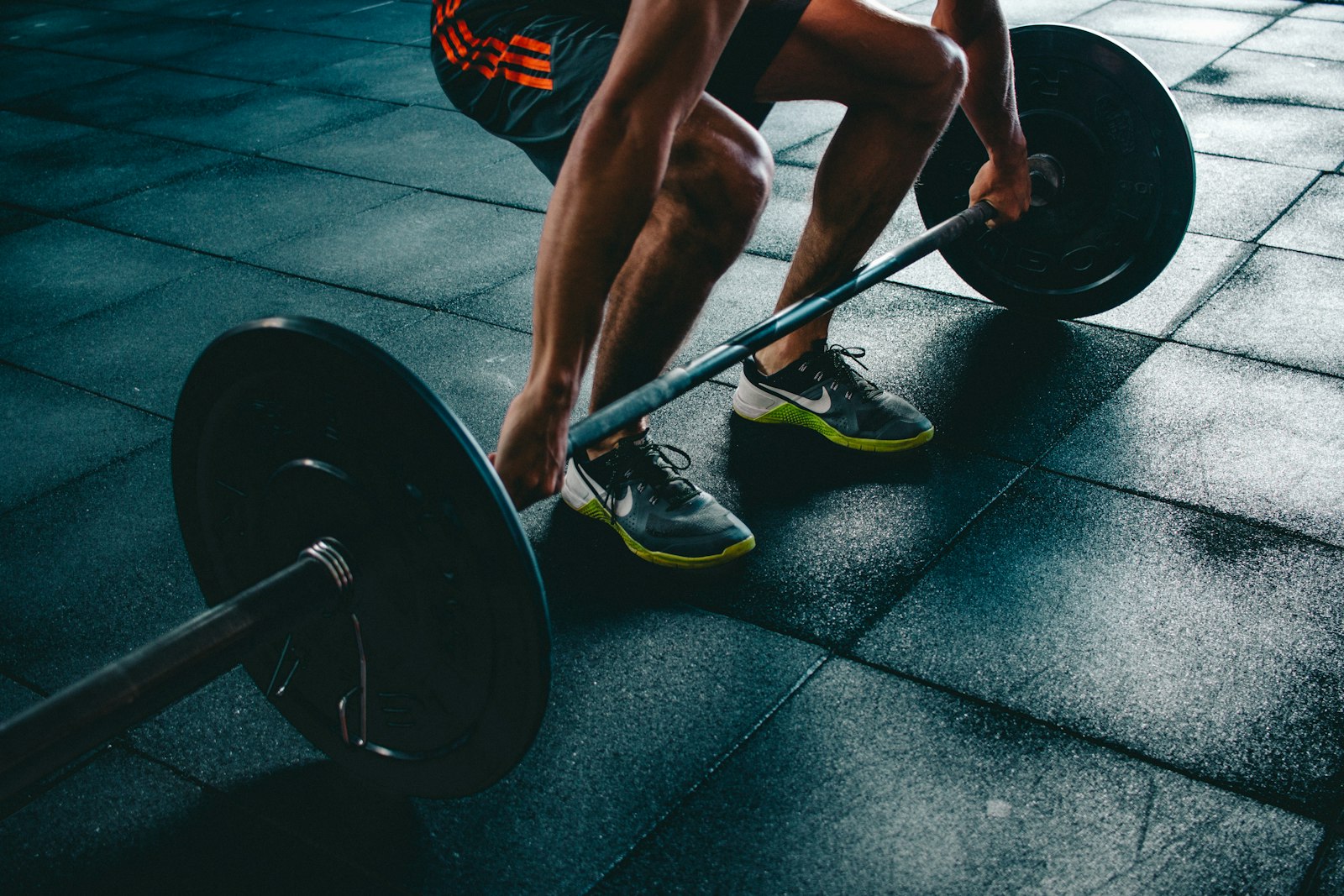
Wrapping bands around a loaded barbell changes the resistance profile to match your natural strength curve. At the bottom of a squat, where you are weakest, the band is loose and adds minimal load. At the top, where you are strongest, the band is stretched and adds significant load. Louie Simmons popularized this approach at Westside Barbell, and subsequent research in the Journal of Strength and Conditioning Research confirmed that banded barbell training improved rate of force development compared to straight weight alone.
Rehabilitation
Physical therapists have used elastic resistance for decades because it allows loading at intensities low enough for injured tissues while providing smooth, joint-friendly resistance throughout the range of motion. A 2015 Cochrane review found that elastic resistance training was effective for improving strength and function in older adults and post-surgical populations.
Material Quality: Why It Matters
Not all latex is the same. Resistance bands are typically made from one of three materials:
Natural latex (found in WODFitters, ROGUE, and most premium brands): harvested from rubber trees, processed into sheets, and cut to size. Offers the best elasticity, snap-back consistency, and durability. Can cause allergic reactions in people with latex allergies.
Thermoplastic elastomer (TPE): a synthetic rubber alternative. Cheaper to produce, hypoallergenic, and marketed as "eco-friendly." The downside: TPE bands lose elasticity faster, deform under sustained load, and are more prone to cracking in cold temperatures. A study in the Journal of Applied Polymer Science found that TPE retained only 78% of its original elastic modulus after 5,000 stretch cycles, compared to 94% retention for natural latex.
Fabric-covered bands: a newer category featuring elastic fabric covers over internal rubber or latex. These are comfortable and do not roll or snap against skin, but the fabric adds cost without improving resistance properties. They are best for mini loop bands used in warm-up protocols where skin comfort matters.
Our recommendation: Buy natural latex unless you have a latex allergy. The durability advantage alone justifies any price premium.
Related Reading
- Best Home Gym Equipment 2026 -- bands as part of a full setup
- Best Adjustable Dumbbells 2026 -- complement bands with free weights
- Best Stretching Equipment 2026 -- bands for mobility work
- Best Online Personal Trainer Platforms 2026 -- programming for band workouts
- Best Pre-Workout Supplements 2026 -- fuel your training
Frequently Asked Questions
Can you build muscle with resistance bands alone?
Yes, to a degree. The research supports band-only training for muscle hypertrophy in untrained and moderately trained individuals. A 2019 study in the Journal of Sports Science and Medicine found that 8 weeks of elastic band training produced similar increases in muscle thickness and strength compared to conventional weight training in untrained women. For advanced lifters seeking maximal hypertrophy, bands are better used as a supplement to free weights rather than a replacement.
How do I know what resistance level to buy?
Start lighter than you think. The most useful resistance level for most people is the medium range (25 to 65 lbs for loop bands). Light bands (10 to 35 lbs) are essential for warm-ups, face pulls, and rehabilitation. Heavy bands (50 to 125 lbs) are primarily for banded barbell work and band-assisted pull-ups for heavier individuals. A 5-band set like WODFitters covers all bases.
How long do resistance bands last?
With regular use (3 to 5 training sessions per week), high-quality natural latex bands last 2 to 4 years. Budget bands and TPE bands last 6 to 18 months. Store bands away from direct sunlight and heat, which accelerate degradation. Inspect bands before each use for nicks, cuts, or thinning areas -- a damaged band can snap under load.
Are resistance bands safe?
Generally yes, with caveats. Always inspect bands before use. Anchor bands securely (a door anchor or a solid structure, not a door handle that might slip). Stand on bands at their center point to prevent them from rolling off your feet. Do not stretch bands beyond 2.5 times their resting length. And be especially careful with eye-level exercises -- a snapping band to the face is a genuine injury risk. Consider wearing safety glasses for overhead or face-height band work.
Loop bands or tube bands?
Loop bands for versatility. Tube bands for convenience on isolation exercises. If you can only buy one type, get loops. They cover more exercises, last longer, and are used in more training applications. If you want to replicate cable machine work at home and prefer the grip comfort of handles, add a tube set as a supplement.
Can resistance bands replace a gym membership?
For many people, yes. Bands combined with bodyweight exercises cover every major movement pattern. The research shows comparable strength gains for non-athletes. Where bands fall short is maximal strength development above 200+ pounds of resistance, where free weights and machines are more practical. For general fitness, aesthetics, and health, a good set of bands and a doorway pull-up bar is a complete gym.
The Bottom Line
The WODFitters 5-band set at $49.97 is the best value in the resistance band market. Natural latex, five resistance levels, and proven durability across thousands of user reviews. It is our top recommendation for anyone building a home gym, supplementing their existing training, or looking for a travel-friendly workout solution.
If you want the absolute best quality and do not mind paying per band, ROGUE Monster Bands are the premium choice. If you just need a cheap set of mini bands for warm-ups, Fit Simplify at $9.99 is a no-brainer.
Regardless of which brand you choose, buy natural latex and treat your bands with basic care. They will serve you longer than most gym memberships last.
Affiliate Disclosure: Freak Naturals may earn a commission on purchases made through links in this article. This does not affect our editorial independence — we recommend products based on research and testing, not commissions.