FREAK
FREAK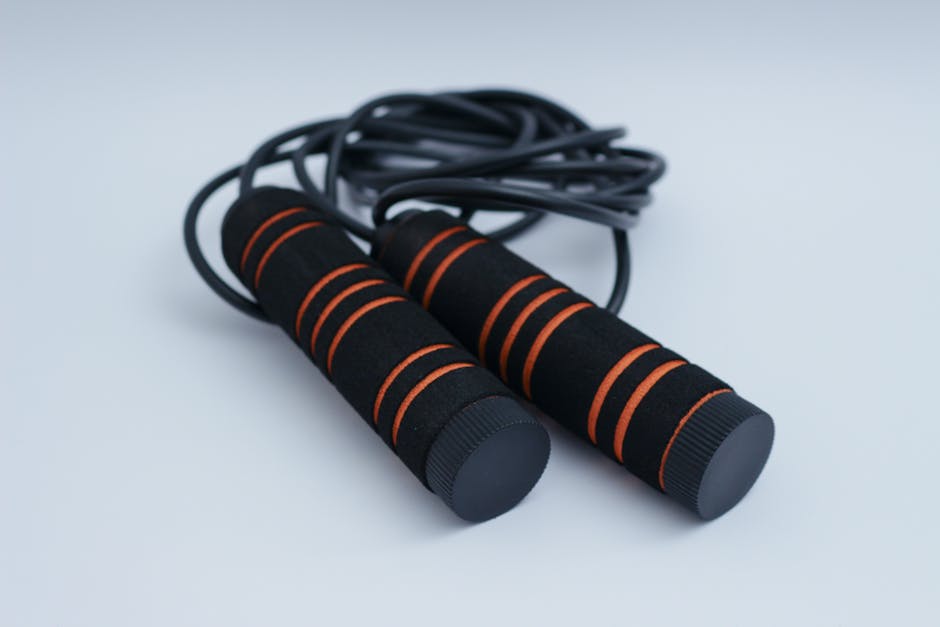
The Most Underrated Training Tool in Fitness
A jump rope costs less than a single month at most gyms and delivers conditioning results that rival far more expensive equipment. This is not hype. The research backs it up.
A 2019 study in the European Journal of Applied Physiology found that 12 weeks of jump rope training improved cardiovascular fitness (VO2max) by 7.7% in moderately trained adults -- comparable to improvements seen from running programs of similar duration and frequency. A 2020 meta-analysis in the British Journal of Sports Medicine concluded that jump rope training is among the most time-efficient forms of cardiovascular exercise, producing greater caloric expenditure per minute than jogging, cycling, or swimming at moderate intensities.
The coordination demands are an additional benefit that pure cardio machines cannot replicate. A 2018 study in the Journal of Sports Science and Medicine found that 8 weeks of jump rope training significantly improved dynamic balance, agility, and motor coordination in young adults. Boxers have known this for a century. The rest of the fitness world is catching up.
But not all jump ropes are the same. The cable material, handle design, bearing mechanism, weight distribution, and length adjustability create dramatically different experiences. A bad rope tangles, slows you down, and hurts when it whips your shins. A good rope becomes invisible -- you forget it is there because it turns exactly where and when you expect it to.
We tested the six most popular jump ropes across speed work, double-unders, weighted conditioning, and general cardio. Here is what we found.
Our Top Picks at a Glance
- Best Overall: Crossrope Get Lean Set ($99) -- Interchangeable weighted ropes with precision bearings and the smoothest rotation we tested
- Best Speed Rope: RPM Sprint 4.0 ($34.99) -- The fastest rope for double-unders and competition-level speed work
- Best for CrossFit: EliteSRS Surge 3.0 ($32.95) -- Ultra-light cable with adjustable handle weight for scaling intensity
- Best Budget: WOD Nation Speed Jump Rope ($14.99) -- Excellent speed rope at a fraction of the competition's price
- Best Classic Design: Buddy Lee Aero Speed ($39.95) -- The rope that professional boxers and jump rope athletes swear by
- Best Starter Rope: Amazon Basics Weighted Jump Rope ($12.99) -- A low-cost entry point that gets the job done
Weighted vs Speed Ropes: Which Do You Need?
This is the fundamental decision, and getting it wrong means buying a rope that fights your training goals.
Speed Ropes
Speed ropes use thin, lightweight cables (usually coated steel wire or thin PVC cord) that spin fast with minimal effort. They are built for high-rep work: double-unders in CrossFit, speed rounds in boxing, and high-cadence cardio. The handles typically feature ball bearings or bushings that allow the cable to rotate independently of your wrist motion, enabling very fast spin speeds.
Speed ropes require more coordination because the thin cable provides less feedback -- you cannot feel where the rope is in its arc as easily as a heavier rope. This makes them harder for beginners but essential for anyone who wants to progress to advanced skills.
Weighted Ropes
Weighted ropes add mass to the cable, the handles, or both. This slows the rotation speed but increases the training stimulus on your shoulders, forearms, and cardiovascular system. A 2019 study in the Journal of Strength and Conditioning Research found that weighted jump rope training produced significantly greater upper body muscular endurance gains compared to unweighted rope training over an 8-week period, while delivering equivalent cardiovascular adaptations.
Weighted ropes are easier for beginners because the added mass provides more tactile feedback -- you can feel the rope's position throughout each revolution, which helps with timing. They are also excellent conditioning tools for combat sports athletes who need shoulder endurance.
The Best Approach
Start with a slightly weighted rope (1/4 lb cable) to learn timing and coordination. Progress to a speed rope once your technique is consistent. Use a heavier weighted rope (1/2 lb to 1 lb cable) for conditioning-focused sessions. The Crossrope system makes this easy by allowing cable swaps on the same handles.
The Top 6 Jump Ropes, Ranked
1. Crossrope Get Lean Set -- Best Overall
Price: $99 (set includes 1/4 lb and 1/2 lb ropes) | Cable: Coated steel (two weights) | Handles: Weighted, ball bearing | Adjustable Length: Yes (clip system)
The Crossrope system is the most thoughtfully engineered jump rope on the market. The patented clip connection lets you swap cables in seconds, so you can switch from the 1/4 lb rope (fast, cardio-focused) to the 1/2 lb rope (slower, strength-building) without changing handles. The ball bearings are smooth and precise, producing a consistent arc with minimal wrist effort.
The handles are slim enough to grip comfortably but heavy enough (with the weighted cable attached) to provide genuine upper body engagement. The cable coating is durable and does not kink after extended use. The length adjustment uses a simple clip-and-cut system -- measure once, cut to size, and you are set.
Crossrope's app provides structured workouts and a timer interface, which adds value for people who want guided sessions. The app is not required but is a nice bonus.
The set at $99 is more expensive than buying two separate ropes, but the convenience of the interchangeable system and the quality of the components justify the premium. If you can only buy one jump rope product, this is it.
What we like: Interchangeable weighted cables. Precision ball bearings. Excellent build quality. No kinking or tangling. App with structured workouts. Adjustable length.
What we do not like: $99 is expensive for a jump rope. The clip system adds slight bulk near the handles. Heavier ropes (sold separately, 1 lb and 2 lb) are an additional cost. Not the fastest option for pure speed work.
Where to buy: Crossrope direct | Amazon
2. RPM Sprint 4.0 -- Best Speed Rope
Price: $34.99 | Cable: Bare steel wire with nylon coating | Handles: Aluminum, dual-bearing | Adjustable Length: Yes (set screw)
If your primary goal is double-unders or speed competition, the RPM Sprint 4.0 is the fastest rope we tested. The dual-bearing system in the aluminum handles creates an almost frictionless rotation. The bare steel cable is thinner and lighter than any coated cable, which means it cuts through the air faster and recovers from off-rhythm catches more quickly.
The handles are CNC-machined aluminum with a knurled grip that stays secure in sweaty hands. At 2.4 ounces per handle, they are featherlight -- all the rotation energy goes into the cable, not into overcoming handle mass.
The set screw length adjustment allows micro-tuning without cutting the cable, which is a major advantage over cut-to-length ropes. If you share the rope with a training partner or want to experiment with length, you can adjust in seconds.
The trade-off for speed is feedback. The ultra-light cable provides almost no tactile sensation, which makes it difficult for beginners to time their jumps. You need solid single-under technique before transitioning to this rope. For experienced jumpers, it is the best speed rope available.
What we like: Fastest rotation of any rope we tested. CNC aluminum handles. Dual-bearing system. Non-destructive length adjustment. Extremely light.
What we do not like: Nearly zero tactile feedback from the ultra-light cable. Not suitable for beginners. Bare steel cable can sting badly on shin hits. Handles are small -- may feel cramped in very large hands.
Where to buy: Amazon | RPM direct
3. EliteSRS Surge 3.0 -- Best for CrossFit
Price: $32.95 | Cable: PVC-coated steel | Handles: Aluminum with adjustable weights | Adjustable Length: Yes (set screw)
The EliteSRS Surge 3.0 bridges the gap between speed and weighted ropes with its adjustable handle weights. Each handle accepts removable weight inserts (1 oz and 2 oz included), letting you scale the training stimulus from pure speed work to moderate conditioning without changing ropes.
For CrossFit athletes who need to alternate between fast double-unders in a WOD and slower, heavier warm-up rounds, this adjustability is genuinely useful. The PVC-coated steel cable is a middle ground between bare wire (too fast for beginners) and weighted cables (too slow for speed work). It provides enough feedback to time jumps while spinning fast enough for efficient double-unders.
The aluminum handles are well-balanced and the bearing system produces smooth, consistent rotation. The set screw length adjustment is quick and non-destructive.
What we like: Adjustable handle weights for variable intensity. Good middle ground between speed and weighted. Aluminum handles. Smooth bearings. Affordable.
What we do not like: Not as fast as the RPM for pure speed work. Not as heavy as Crossrope for pure conditioning. The weight inserts can rattle slightly if not fully tightened. PVC coating adds more air resistance than bare cable.
Where to buy: Amazon | EliteSRS direct
4. WOD Nation Speed Jump Rope -- Best Budget
Price: $14.99 | Cable: PVC-coated steel | Handles: Plastic with ball bearings | Adjustable Length: Yes (set screw)
At $14.99, the WOD Nation delivers 80% of the performance of ropes costing twice as much. The ball bearing handles produce smooth rotation, the PVC-coated steel cable is durable and provides good feedback, and the set screw adjustment lets you dial in your length without cutting.
The plastic handles are the obvious cost-saving measure, and they are perfectly functional. They are lighter than aluminum, which some jumpers actually prefer. The grip texture is adequate in dry conditions but can get slick in heavy sweat -- chalk or gloves solve this.
This is our recommendation for anyone who wants a real speed rope without committing $35 to $100. It handles double-unders, single-unders, and general cardio reliably. If you outgrow it, you have spent less than the cost of lunch.
What we like: $14.99 for a ball bearing speed rope. Smooth rotation. Non-destructive length adjustment. Durable cable. Available in multiple colors.
What we do not like: Plastic handles feel cheaper than aluminum alternatives. Grip gets slick when sweaty. Cable is slightly thicker than premium speed ropes. Bearings may develop play after 6 to 12 months of heavy daily use.
Where to buy: Amazon
5. Buddy Lee Aero Speed -- Best Classic Design
Price: $39.95 | Cable: PVC cord (swivel connection) | Handles: Ergonomic plastic | Adjustable Length: Yes (cut to length)
Buddy Lee is a former Olympic wrestler and competitive jump rope athlete who has been designing ropes for over three decades. The Aero Speed reflects that experience. The ergonomic handle design positions your wrist at a natural angle that reduces fatigue during long sessions. The patented swivel system uses a ball-and-socket joint rather than bearings, which provides a different (some say smoother) rotation feel.
The PVC cord is thicker than steel cable ropes, which provides excellent feedback and makes this a great transition rope for intermediate jumpers moving from beginner to advanced skills. It is also more forgiving on shin hits -- PVC stings less than bare steel.
The design is simple, proven, and preferred by many boxing coaches and jump rope specialists. It lacks the modular features of the Crossrope or the raw speed of the RPM, but it delivers a reliable, comfortable jumping experience.
What we like: Ergonomic handle design reduces wrist fatigue. Ball-and-socket swivel is smooth and durable. PVC cord provides great feedback. Preferred by boxing coaches. Proven design with decades of refinement.
What we do not like: Cut-to-length adjustment is permanent. PVC cord is slower than steel cable. More expensive than the WOD Nation for similar functionality. Not ideal for competitive double-under speed.
Where to buy: Amazon | Buddy Lee direct
6. Amazon Basics Weighted Jump Rope -- Best Starter Rope
Price: $12.99 | Cable: PVC cord (weighted) | Handles: Foam-padded | Adjustable Length: Yes (cut to length)
The Amazon Basics weighted rope is the simplest entry point for jump rope training. The foam-padded handles are comfortable, the PVC cord provides ample feedback for learning timing, and the slight weight helps beginners feel the rope throughout each revolution.
This is not a performance rope. The bushing system (not ball bearings) creates more friction than premium options, and the cord does not spin fast enough for double-unders. But for learning to jump, for casual cardio, and for getting a feel for whether jump rope training appeals to you before investing more, it does the job.
What we like: $12.99 starting price. Foam-padded handles are comfortable. Weighted cord helps beginners feel the rope. Simple and durable.
What we do not like: Bushing rotation is slower and less smooth than bearing systems. Not suitable for speed work or double-unders. Cut-to-length adjustment only. PVC cord can kink with improper storage.
Where to buy: Amazon
Comparison Table
| Feature | Crossrope Get Lean | RPM Sprint 4.0 | EliteSRS Surge 3.0 | WOD Nation | Buddy Lee Aero | Amazon Basics |
|---|---|---|---|---|---|---|
| Price | $99 (set) | $34.99 | $32.95 | $14.99 | $39.95 | $12.99 |
| Cable Type | Coated steel (weighted) | Nylon-coated steel | PVC-coated steel | PVC-coated steel | PVC cord | PVC cord (weighted) |
| Handle Material | Weighted composite | CNC aluminum | Aluminum | Plastic | Ergonomic plastic | Foam-padded |
| Bearing Type | Ball bearing | Dual bearing | Ball bearing | Ball bearing | Ball-and-socket swivel | Bushing |
| Length Adjustment | Clip and cut | Set screw | Set screw | Set screw | Cut to length | Cut to length |
| Best For | All-around training | Double-unders, speed | CrossFit, versatility | Budget speed rope | Boxing, classic feel | Beginners |
| Weight | Adjustable (1/4 to 1/2 lb cable) | Ultra-light | Light + adjustable handle weight | Light | Medium | Medium-light |
| Our Pick | Best Overall | Best Speed | Best for CrossFit | Best Budget | Best Classic | Best Starter |
How to Size a Jump Rope
Proper rope length is the single biggest factor in jump rope performance. Too long creates excess arc, slows you down, and causes the rope to tangle. Too short forces you to jump higher, burns out your calves prematurely, and catches your feet.
The standard method: Stand on the center of the rope with one foot. Pull the handles straight up along your body. For beginners, the handles should reach your armpits. For intermediate jumpers, the handles should reach your chest (nipple line). For advanced speed work, the handles should reach just below your chest.
The measured method: Your ideal rope length is approximately your height plus 3 feet for beginners, plus 2.5 feet for intermediate, and plus 2 feet for advanced. A 5'10" intermediate jumper needs roughly an 8'4" rope.
Start longer and shorten as your technique improves. You can always cut a rope shorter, but you cannot make it longer. Ropes with set screw adjustments (RPM, EliteSRS, WOD Nation) let you experiment without permanent cuts.
Jump Rope Technique: The Evidence-Based Fundamentals
Wrist Position
Turn the rope with your wrists, not your arms. Your elbows should stay close to your body, bent at roughly 90 degrees, with forearms pointing slightly forward. The rotation axis is your wrist joint. Using your shoulders or elbows to turn the rope wastes energy and limits speed.
Jump Height
Jump only high enough to clear the rope -- roughly 1 to 2 inches off the ground for single-unders. Over-jumping is the most common beginner mistake. It exhausts your calves, increases impact forces, and slows your cadence. A study in the Journal of Human Kinetics found that minimizing jump height during rope skipping reduced ground reaction forces by 28% while maintaining cadence, suggesting that efficient jumpers absorb less impact per session.
Landing
Land on the balls of your feet with soft knees. Never land flat-footed or on your heels. The slight knee bend absorbs impact through your muscles rather than transmitting it directly to your joints. Think of your legs as springs, not stilts.
Breathing
Breathe rhythmically and do not hold your breath. Nasal breathing (in through the nose, out through the mouth) helps regulate effort during sustained jumping. If you cannot maintain a conversation while jumping at moderate pace, slow down.
Related Reading
- Best Home Gym Equipment 2026 -- the full home gym setup
- Zone 2 Cardio Guide -- cardio programming for endurance
- Best Running Shoes 2026 -- footwear for jump rope sessions
- Best Fitness Trackers 2026 -- track your cardio sessions
- Best Electrolyte Drinks 2026 -- hydration for high-intensity cardio
Frequently Asked Questions
How many calories does jump rope burn?
Caloric expenditure depends on body weight, intensity, and skill level. A commonly cited Harvard Health estimate puts jump rope at roughly 300 calories per 30 minutes for a 155-lb person at moderate intensity. High-intensity sessions (fast cadence, double-unders, weighted rope) can exceed 400 calories in 30 minutes. These numbers are estimates -- individual variation is significant.
Is jump rope bad for your knees?
Not inherently. A 2020 study in the Journal of Orthopaedic and Sports Physical Therapy found that jump rope generates lower ground reaction forces per stride than running, provided the jumper uses proper technique (minimal jump height, forefoot landing, soft knees). People with existing knee injuries should start with short sessions on a forgiving surface (rubber mat or gym floor) and increase duration gradually.
How often should I jump rope?
For general conditioning, 3 to 5 sessions per week of 10 to 30 minutes is sufficient. Beginners should start with 5 to 10 minutes and build gradually, as the calves, Achilles tendons, and foot muscles need time to adapt. Competitive athletes may jump daily. Rest days between sessions are recommended for the first month.
Can beginners do double-unders?
Yes, but not immediately. Master consistent single-unders first -- at least 50 consecutive without a miss. Then practice the double-under power jump (a higher single-under) to develop timing. Most people need 2 to 4 weeks of regular practice before landing their first double-under, and 2 to 3 months before double-unders become consistent.
Steel cable or PVC cord?
Steel cable (coated or bare) is faster, more durable, and preferred for speed work and double-unders. PVC cord is thicker, slower, provides more feedback, and hurts less when it hits your shins. Beginners should start with PVC or a coated steel cable. Advanced jumpers should use bare or thinly coated steel for speed work.
What surface should I jump rope on?
The ideal surface has slight give: rubber gym flooring, a jump rope mat, a tennis court, or packed dirt. Avoid concrete (too hard -- high impact forces) and thick carpet (rope catches and slows). If you jump on hard surfaces, invest in a jump rope mat or place a thin rubber mat down.
The Bottom Line
The Crossrope Get Lean Set at $99 is the best jump rope product for most people. The interchangeable weighted cables cover everything from fast cardio to strength-focused conditioning, and the build quality ensures years of use. If that is over budget, the WOD Nation Speed Jump Rope at $14.99 delivers genuine speed rope performance for the cost of a mediocre lunch.
For competition-level speed work, the RPM Sprint 4.0 is unmatched. For CrossFit versatility, the EliteSRS Surge 3.0 bridges the gap between speed and weighted training. And for absolute beginners, the Amazon Basics Weighted Rope at $12.99 provides a forgiving, feedback-rich introduction to the skill.
Pick a rope, learn the technique, and give it 30 days. Jump rope has one of the highest returns on investment of any fitness tool -- measured in both dollars and results.
Affiliate Disclosure: Freak Naturals may earn a commission on purchases made through links in this article. This does not affect our editorial independence — we recommend products based on research and testing, not commissions.