FREAK
FREAK
Four Sigmatic Mushroom Coffee Review 2026: Honest Verdict
Quick Answer
Freak Score: 5.9/10 — Good Coffee, Underdosed Mushrooms
- USDA Organic, Fair Trade certified instant coffee — genuinely clean formula
- 250mg lion's mane falls below the 500–3,000mg range used in human clinical trials; extract ratio not disclosed
- Best for: people who want high-quality organic instant coffee with mild functional upside
- Skip if: you're serious about lion's mane's cognitive benefits — alternatives offer better-disclosed dosing at a similar price
Mushroom coffee went from fringe health-hacker territory to a $4.5 billion global market in under a decade. Four Sigmatic built that market. They were the brand that convinced millions of Americans to dissolve a packet of fungi-infused instant coffee into their morning routine, and they deserve credit for that. The problem is that the category has grown up around them — and the dosing transparency hasn't kept pace.
This review takes an honest look at what you're actually getting in a packet of Four Sigmatic Mushroom Coffee Mix with Lion's Mane & Chaga. Spoiler: the coffee is genuinely good. The mushroom story is more complicated.
Product Overview
Four Sigmatic Mushroom Coffee Mix with Lion's Mane & Chaga comes in single-serve packets — 10 to a box, currently retailing for around $15.00. Each packet contains organic instant Arabica coffee plus 250mg of lion's mane extract and 250mg of chaga extract. It's USDA Organic and Fair Trade certified, mixes instantly in hot water, and tastes like coffee — which, honestly, isn't something you can say about every mushroom coffee on the market.
The formula is simple: coffee, mushroom extracts, and nothing else. No sweeteners, no fillers, no artificial anything. On the clean-label front, Four Sigmatic delivers. On the therapeutic-dosing front — that's where things get interesting.
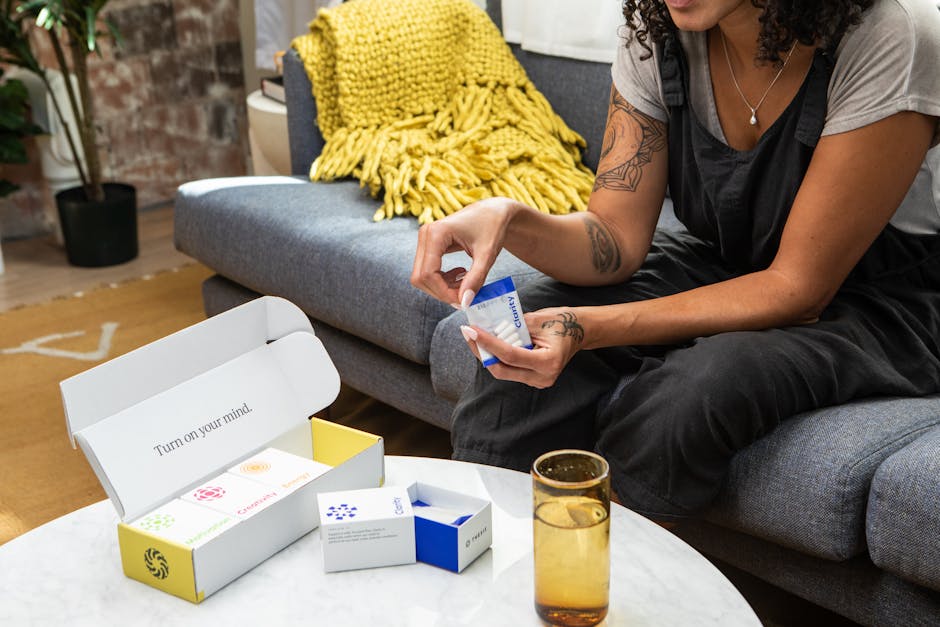
Product image included below.
The Freak Score
| Criteria | Weight | Score | Notes |
|---|---|---|---|
| Ingredient Quality | 18% | 5/10 | Lion's mane and chaga extracts — but no extract ratio or beta-glucan % disclosed |
| Dosing | 18% | 4/10 | 250mg lion's mane is well below the 500–3,000mg range used in clinical research |
| Clean Formula | 15% | 9/10 | USDA Organic, no sweeteners, no artificial additives — genuinely clean |
| Transparency | 12% | 5/10 | No extract ratio, no beta-glucan %, vague "organic extract" label |
| Third-Party Testing | 12% | 7/10 | USDA Organic + Fair Trade certified; no NSF/Informed Sport for mushroom potency |
| Value | 13% | 5/10 | $1.50/packet is fine for organic coffee; mediocre if you're paying for therapeutic mushrooms |
| Source & Manufacturing | 12% | 7/10 | Certified organic supply chain; specific mushroom origin not disclosed |
| Overall Freak Score | — | 5.9/10 | Good coffee brand, unclear mushroom product |
What the Score Means
A 5.9 isn't a failing grade — it's a "proceed with honest expectations" grade. Four Sigmatic makes a genuinely clean product. The certifications are real. The coffee tastes good. But the Freak Score dips on dosing and transparency because this is sold as a functional supplement, and at 250mg of undisclosed-ratio lion's mane extract, the functional claims are on shaky ground.
The brand pioneered the category. They also established the norms that other brands have since started exceeding.
Full Ingredient Breakdown
| Ingredient | Dose | Verdict | Notes |
|---|---|---|---|
| Organic Instant Arabica Coffee | ~50–60mg caffeine (est.) | Good | High-quality arabica base; actual caffeine not disclosed on label but comparable to half a standard cup |
| Lion's Mane Extract (Hericium erinaceus) | 250mg | Neutral | Extract ratio undisclosed; could be effective if high-ratio, but brand doesn't confirm |
| Chaga Extract (Inonotus obliquus) | 250mg | Neutral | Antioxidant-rich; human clinical evidence is limited; extract ratio undisclosed |
That's the full formula. Three ingredients, all organic. No fillers, no flow agents, no sweeteners. From a clean-label standpoint, this is about as simple as it gets.
The issue isn't what's in it. It's what you don't know about what's in it.
Deep Dive: Lion's Mane — What the Research Actually Shows
Lion's mane (Hericium erinaceus) has some of the most compelling cognitive research in the mushroom world. The key mechanism: it stimulates nerve growth factor (NGF) production, a protein critical for the growth and maintenance of neurons. A 2010 paper in Neurological Research confirmed that hericenones and erinacines — bioactive compounds in lion's mane — can cross the blood-brain barrier and upregulate NGF synthesis in the brain.
The human clinical data is promising but dose-specific. The landmark double-blind, placebo-controlled trial by Mori et al. (2009) — published in Phytotherapy Research — used 500mg per day of dried powder in older adults with mild cognitive impairment and showed significant improvements in cognitive function scores over 16 weeks. Other studies have used anywhere from 500mg to 3,000mg of dried mushroom powder daily to see measurable effects.
Here's the thing about extracts: a concentrated extract can theoretically deliver equivalent bioactives at a lower dose. A common ratio is 8:1 — meaning 250mg of an 8:1 extract is equivalent in raw mushroom content to 2,000mg of dried powder. If Four Sigmatic's extract is an 8:1 ratio, then 250mg might put you in the therapeutic range.
But here's the problem: they don't tell you. The label says "organic lion's mane extract." No ratio. No beta-glucan percentage. No third-party certificate of analysis that verifies potency. You're being asked to trust that the dose is meaningful without any way to verify it.
That's not how supplements should work in 2026. Examine.com's comprehensive review of lion's mane research is a useful independent reference for understanding what doses and evidence actually look like.
Deep Dive: Chaga — Antioxidant Promise, Limited Human Data
Chaga (Inonotus obliquus) is a parasitic fungus that grows primarily on birch trees in cold climates. It's rich in antioxidants, particularly betulin and betulinic acid derived from the birch host, as well as melanins and polysaccharides that have shown anti-inflammatory activity in laboratory settings.
The marketing leans hard on antioxidant content — and the in-vitro evidence is genuinely interesting. Cell studies and animal research have demonstrated immunomodulatory and anti-inflammatory effects. The issue is the translation gap. Most chaga research hasn't made it to human randomized controlled trials yet. The antioxidant compounds are real. Whether drinking 250mg of chaga extract daily in your coffee translates to any measurable benefit in healthy humans is, honestly, still an open question.
Chaga's strongest use case right now is probably as a general antioxidant support ingredient — not as a standalone therapeutic. In a coffee drink where you're already getting polyphenols from the arabica, it adds to that story. Just don't expect clinical-grade immune outcomes from your morning cup.
One more consideration: chaga concentrates oxalates from the birch tree. Anyone with kidney stones or a predisposition to them should exercise some caution with regular high-dose chaga consumption. At 250mg per day, this is unlikely to be a meaningful risk, but it's worth knowing.
The Transparency Problem
This is the real issue with Four Sigmatic — and, frankly, with a lot of the mushroom supplement industry.
When a brand lists "lion's mane extract" on a label without specifying an extract ratio (e.g., 8:1, 10:1) or a beta-glucan percentage, you have no way of verifying what you're getting. Beta-glucans are the primary bioactive compounds in medicinal mushrooms. They're what most of the immune and cognitive research is based on. A high-quality mushroom extract should specify beta-glucan content — something like "30% beta-glucans" — because that tells you the actual potency.
Without that number, 250mg could be a concentrated, clinically relevant dose. Or it could be a relatively weak extract where 250mg delivers the equivalent of, say, 500mg of raw mushroom powder. The consumer has no way to tell the difference.
Compare this to the pharmaceutical analogy: imagine a drug label that said "active ingredient: X, 250mg" without specifying whether X was the free base form or the salt form — two versions with meaningfully different bioavailability. That would never pass regulatory scrutiny. Mushroom supplements don't face the same standard, but the principle matters.
Four Sigmatic has been making mushroom products since 2012. They've had 14 years to add extract ratio disclosure to their labels. The fact that they haven't is a choice, not an oversight.
Taste & Experience
Let's be fair where fairness is due: this stuff actually tastes like coffee.
A lot of mushroom coffees have a problem — the mushroom flavors (earthy, sometimes bitter, occasionally just weird) intrude on what most people want from their morning drink. Four Sigmatic has nailed the ratio. You get a smooth, medium-bodied cup that reads as coffee first and functional beverage second. There's a mild earthiness on the finish if you're looking for it, but it's subtle. Mix it in hot water or milk, and most people won't notice anything unusual.
The caffeine level is lower than a standard cup of coffee — roughly half, by most estimates — which is either a pro or a con depending on what you want. If you're already having a full cup of coffee elsewhere in your day and want something lighter in the afternoon, it works well. If this is your only morning caffeine, it might not get you where you need to be.
The packets dissolve completely with no grittiness. No sediment. No clumping. This is convenient, single-serve format done right — ideal for travel or office drawers where you don't want to deal with brewing equipment.
How to Use It
Timing: Morning is the natural fit. Lion's mane has been studied most in the context of long-term daily use — the cognitive benefits in the Mori et al. trial accumulated over 16 weeks of consistent supplementation. Don't expect a noticeable "hit" the first time. If it's going to work, it'll work over months.
With other supplements: Four Sigmatic's coffee has minimal ingredients, so it stacks cleanly. If you're taking a separate lion's mane capsule to hit therapeutic doses, you can still drink this without double-dosing concerns — at 250mg, the amounts are modest enough. L-theanine pairs well with any caffeinated beverage and can smooth out jitteriness; Four Sigmatic doesn't include it, so add your own if you want that effect.
Heat: Dissolve in water that's hot but not boiling. Excessively high temperatures can degrade some bioactive compounds. Around 175–185°F is ideal.
Consistency: If you're buying this as a functional product rather than just a pleasant coffee, commit to daily use for at least 8 weeks before evaluating results.
Pros
- Genuinely great-tasting instant coffee — earthy notes don't overpower
- Exceptionally clean formula: USDA Organic, Fair Trade, zero additives or sweeteners
- Maximum convenience — single-serve packets, dissolves in seconds, no equipment needed
- Lower caffeine than a standard coffee, making it easy to fit into a daily routine without overstimulating
- Certifications are real and meaningful (USDA Organic is a rigorous standard)
Cons
- 250mg lion's mane is below the doses used in clinical human trials (500–3,000mg) — without an extract ratio, you can't assess therapeutic equivalence
- No extract ratio disclosed, no beta-glucan percentage — you're trusting the dose matters without any way to verify it
- $1.50 per serving is mediocre value given the dosing ambiguity; competitors offer more disclosed mushroom content for a similar price
- No NSF Certified for Sport or Informed Sport certification for mushroom content — USDA Organic doesn't verify potency
Who Should Buy This
The clean-coffee seeker. If your primary goal is a high-quality, USDA Organic, Fair Trade instant coffee — and the mushroom benefits are a welcome bonus rather than the whole point — Four Sigmatic is legitimately excellent. It's clean, it tastes good, and it's convenient. The certifications are meaningful.
The low-caffeine commuter. If you need something hot and comforting in the morning but don't want the full jolt of a standard cup, this is a pleasant middle ground.
The mushroom-curious beginner. If you've never tried functional mushrooms and want an easy, palatable entry point without committing to capsule protocols, this is a low-friction introduction to the concept.
Who Should Skip This
Anyone expecting clinical-grade cognitive support from lion's mane. If you read the Mori et al. research and want to replicate it, you need a product that tells you exactly what you're getting — extract ratio, beta-glucan percentage, and dosing that gets you into the 500mg–1,000mg+ range of confirmed-potency extract. Four Sigmatic doesn't give you the information to know if you're there.
For a full comparison of all the top options, see our best mushroom coffee guide for 2026 and MUD/WTR review.
Better alternatives to consider:
Everyday Dose ($35/month, ~$1.17/serving) is the more transparency-forward option in this space. It delivers 750mg of lion's mane per serving — three times Four Sigmatic's dose — and also includes collagen and L-theanine in a formula that stacks more holistically. It's not certified organic, but the mushroom dosing is disclosed and meaningfully higher. If you're buying for the functional mushroom angle, this is where the money should go.
RYZE Mushroom Coffee ($40/month, ~$1.33/serving) gives you a 2,000mg total mushroom blend across six species per serving. The tradeoff: per-mushroom amounts are undisclosed, so you can't evaluate whether any single species hits a meaningful dose. It's a similar transparency problem to Four Sigmatic, scaled up in volume. Still, the total mushroom load is higher and the formulation philosophy is more mushroom-first.
Comparison Table
| Four Sigmatic | Everyday Dose | RYZE Mushroom Coffee | |
|---|---|---|---|
| Price/serving | $1.50 | ~$1.17 | ~$1.33 |
| Lion's Mane dose | 250mg (ratio unknown) | 750mg (disclosed) | Undisclosed (part of 2,000mg blend) |
| Certifications | USDA Organic, Fair Trade | None | USDA Organic |
| Taste | Clean, coffee-forward | Slightly more earthy, pleasant | Creamy, mild |
| Other actives | Chaga 250mg | Collagen, L-theanine | 5 additional mushrooms |
| Freak Verdict | Good coffee, underdosed mushrooms | Better mushroom value, less certified | High mushroom load, poor per-species transparency |
The Bottom Line
Four Sigmatic Mushroom Coffee is genuinely good instant coffee — organic, clean, and easy to drink. The brand built the mushroom coffee category from scratch, and that legacy is real. But in 2026, with competitors now offering higher disclosed doses and greater transparency, Four Sigmatic's 250mg of unlabeled-ratio lion's mane extract doesn't hold up as a therapeutic product. Buy it if you want great organic instant coffee with a mild functional story. If you're serious about lion's mane as a cognitive tool, spend your money somewhere that tells you exactly what you're getting.
Freak Score: 5.9/10 — Recommended for clean-coffee buyers; not recommended as a primary lion's mane supplement.
Where to Buy
- Amazon: $15.00 (10-pack) — Buy on Amazon
- Brand Direct: Buy from Four Sigmatic
Prices shown may vary. Links may be affiliate links.
Frequently Asked Questions
Does Four Sigmatic Mushroom Coffee actually work? For cognitive focus and lion's mane benefits specifically, the honest answer is: maybe, but probably not at the dose provided. The 250mg lion's mane dose is below what was used in the primary human clinical trials (500mg–3,000mg of dried powder equivalent). If Four Sigmatic uses a highly concentrated extract, the dose could theoretically be in range — but they don't disclose the extract ratio, so there's no way to verify this. The coffee itself works great as a light caffeine source.
How much caffeine is in Four Sigmatic Mushroom Coffee? Four Sigmatic doesn't specify caffeine content on the label, but their mushroom coffee mixes are widely estimated to contain roughly 50mg of caffeine per serving — about half the caffeine in a standard 8-oz cup of brewed coffee (which typically runs 80–100mg). This makes it a reasonable lower-caffeine alternative, not a caffeine-free option.
Is Four Sigmatic Mushroom Coffee safe? For most healthy adults, yes. The formula is USDA Organic, contains no artificial additives, and the mushroom doses are modest. The main consideration is chaga's oxalate content — anyone with kidney stones or a history of oxalate-related health issues should consult their doctor before consuming chaga regularly. The caffeine is low but present, so those sensitive to caffeine should note it's not caffeine-free.
What's the difference between lion's mane extract and lion's mane powder? Dried mushroom powder is the whole mushroom, dried and milled. Extract concentrates the bioactive compounds (hericenones, erinacines, beta-glucans) by processing the mushroom in water or alcohol. A quality extract will specify its ratio (e.g., 8:1 means 8g of raw mushroom per 1g of extract) and often a beta-glucan percentage. Without that information, you can't compare different products' potency or assess whether a dose is therapeutic.
Is Four Sigmatic better than other mushroom coffees? It depends what you're optimizing for. On clean-label criteria — organic, no additives, no sweeteners — Four Sigmatic is hard to beat. On mushroom dosing transparency and functional potency, alternatives like Everyday Dose (750mg disclosed lion's mane) or RYZE (2,000mg total mushroom blend) give you more to work with. Four Sigmatic is the pioneer, but not necessarily the current leader on ingredient transparency.