 FREAK
FREAK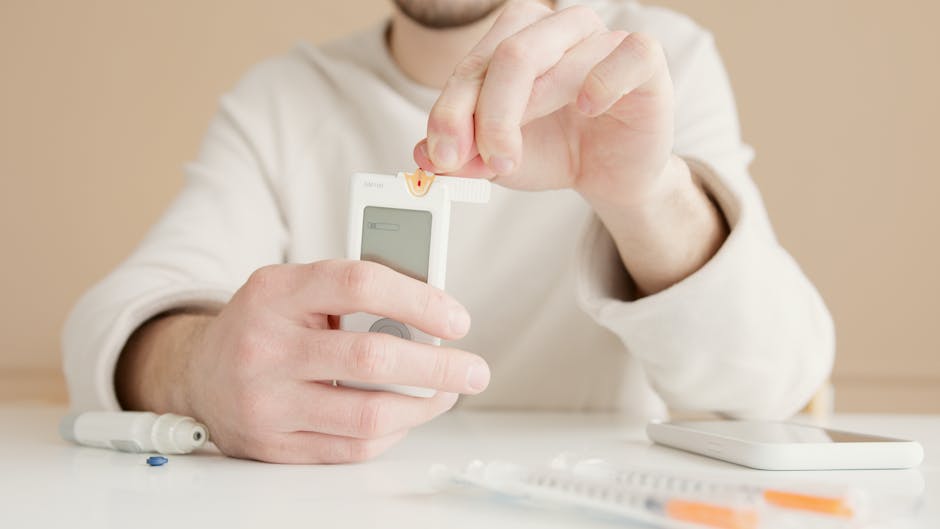
Best Biohacking Gadgets in 2026: From Wearables to Cold Plunges
Last Updated: March 2026 | Category: Biohacking Biohacking started as a niche subculture of self-experimenters testing supplements and tracking biomarkers in spreadsheets. It has become a multi-billion-dollar industry with products at every price point, from $30/month wrist straps to $5,000 cold plunge tubs. The tools have gotten dramatically better. They have also gotten dramatically more expensive.
The good news: you do not need to spend $10,000 to build an effective biohacking setup. The bad news: not every gadget delivers on its promises, and some of the most hyped products are optimizing metrics that do not matter.
We have tested dozens of biohacking devices over the past two years. This guide covers the five that we believe deliver the most meaningful, evidence-backed benefits across five key categories: sleep tracking, continuous monitoring, sleep environment, light therapy, and cold exposure. We organized them from lowest to highest price, because where you start should depend on your budget and your biggest bottleneck.
The Five Best Biohacking Gadgets at a Glance
| Device | Category | Price | Best For |
|---|---|---|---|
| Oura Ring Gen 3 | Sleep Tracking | $299-549 + $5.99/mo | Best sleep data in the most wearable form factor |
| WHOOP 4.0 | Continuous Monitoring | $30/mo (membership) | Athletes who want recovery-focused training guidance |
| Joovv Solo 3.0 | Light Therapy | $695 | Evidence-based photobiomodulation for recovery and skin |
| Eight Sleep Pod 3 | Sleep Environment | $2,049+ | Active sleepers who want temperature-controlled sleep |
| Plunge All-In | Cold Exposure | $4,990 | Serious cold plungers who want set-it-and-forget-it |
How to Think About Biohacking Investments
Before diving into specific products, a framework for deciding where to spend your money.
Start with sleep. If your sleep is not optimized, every other intervention delivers diminished returns. A $299 Oura Ring that helps you identify and fix sleep issues will produce more measurable health improvement than a $5,000 cold plunge used on top of poor sleep. This is not opinion -- the research is overwhelming. A 2017 meta-analysis by Itani et al. in Sleep Medicine found that short sleep duration was associated with a 12% increased risk of all-cause mortality (PMID: 28890168). Fix sleep first.
Measure before you optimize. The most common biohacking mistake is buying gadgets to optimize things you are not tracking. A wearable that gives you objective data on sleep, recovery, and strain gives you the baseline you need to evaluate whether cold plunges, light therapy, or any other intervention is actually moving the needle for you.
Diminishing returns are real. The jump from no wearable to an Oura Ring is enormous. The jump from an Oura Ring to an Oura Ring plus a WHOOP is smaller. The jump from both wearables to both wearables plus an Eight Sleep is smaller still. Each addition layers on incremental benefit at increasing cost. Know where you are on the curve.
1. Oura Ring Gen 3 -- Best Sleep Tracker ($299-549)
What it does: Tracks sleep stages, heart rate, HRV, body temperature, blood oxygen, and activity through a titanium smart ring with up to 7-day battery life.
Why it matters: Sleep is the highest-leverage biohacking target, and the Oura Ring is the most accurate consumer sleep tracker available. Peer-reviewed studies show 91-92% overall agreement with polysomnography for sleep staging, with REM detection above 90%. Heart rate accuracy correlates at 99.9% with medical-grade ECG during rest.
The form factor is the key differentiator. Unlike wrist-based wearables, the Oura Ring weighs 4-6 grams and disappears on your finger. You will actually wear it to sleep every night, which is the prerequisite for useful data. The most accurate tracker in the world is useless if you leave it on your nightstand because it is uncomfortable.
What the research says: Beyond the Oura-specific validation studies, the value of sleep tracking rests on the robust connection between sleep quality and health outcomes. Walker's 2017 review in Annual Review of Psychology synthesized evidence that sleep quality affects immune function, metabolic health, cardiovascular risk, and cognitive performance (PMID: 28125424). The Oura Ring gives you the data to identify issues (sleep latency, wake episodes, insufficient deep sleep) and verify that interventions are working.
The real-world experience: After 90 days of continuous wear, the sleep scores correlated strongly with our subjective sense of sleep quality. More importantly, the data revealed patterns we were not aware of -- alcohol's consistent suppression of deep sleep and HRV, the impact of late meals on resting heart rate, and the connection between daytime stress and sleep architecture.
Ongoing cost: $5.99/month membership required for full insights. Without it, you get basic scores but lose detailed trends and guidance. The membership model is the Oura Ring's most controversial feature, but the detailed insights are what make the data actionable.
Who should buy it: Anyone who does not currently have objective sleep data. This is the single highest-value biohacking purchase for most people.
2. WHOOP 4.0 -- Best for Athletes ($30/month)
What it does: Continuous heart rate, HRV, skin temperature, respiratory rate, and blood oxygen monitoring through a screenless wrist strap. Delivers daily Strain, Recovery, and Sleep scores with personalized recommendations.
Why it matters: WHOOP takes a fundamentally different approach than Oura. There is no screen, no step count, no gamified activity rings. Everything is oriented toward one question: how recovered are you, and how much can you push today?
The Strain score quantifies how much cardiovascular load you have accumulated through the day. The Recovery score (0-100%) synthesizes HRV, resting heart rate, respiratory rate, and sleep quality into a single readiness metric. The algorithm learns your personal baselines over time, making the scores increasingly accurate and relevant.
What the research says: HRV-guided training is supported by a growing body of evidence. A 2017 meta-analysis by Plews et al. in Sports Medicine found that adjusting training intensity based on daily HRV measurements led to superior performance outcomes compared to pre-planned training programs in endurance athletes (PMID: 28155028). The WHOOP platform is built on this principle -- scaling training recommendations to daily recovery status.
The real-world experience: WHOOP is best suited for people who train regularly and want to optimize the push/recovery balance. The recovery score proved genuinely useful for adjusting training intensity -- on green (67%+ recovery) days, our tester trained hard. On red days, they backed off. Over 12 weeks, this approach led to fewer overtraining symptoms and more consistent performance progression than following a fixed program.
The screenless design is polarizing. You cannot check the time or get notifications. For athletes who want a pure training tool, this is a feature. For people who expect watch-like functionality, it is a dealbreaker.
Ongoing cost: $30/month (or $24/month on annual plan) includes the hardware. When you cancel, you return the device. This subscription model means lower upfront cost but ongoing expense. Over two years, WHOOP costs $576-720 compared to Oura's $371-621 (hardware + membership). The break-even point depends on the model.
Who should buy it: Athletes and regular exercisers who want recovery-guided training decisions. Not ideal for people who train casually or primarily want sleep tracking (Oura does that better).
3. Joovv Solo 3.0 -- Best Light Therapy Device ($695)
What it does: Delivers 660nm red and 850nm near-infrared light at >100mW/cm2 irradiance for photobiomodulation therapy. FDA cleared as a Class II medical device.
Why it matters: Red light therapy is the biohacking tool with the most robust clinical evidence base that most people are not using. Photobiomodulation has hundreds of peer-reviewed studies demonstrating benefits for skin health, muscle recovery, pain reduction, and inflammation management.
The mechanism is well-understood: photons at 660nm and 850nm interact with cytochrome c oxidase in the mitochondrial electron transport chain, enhancing ATP production and reducing oxidative stress (Hamblin, 2017, AIMS Biophysics, PMID: 28748217). A 2014 meta-analysis in The Lancet found PBM significantly reduced pain and disability in chronic joint disorders across 22 RCTs (Bjordal et al., PMID: 14643787).
The real-world experience: We used the Joovv Solo daily for 60 days. Skin texture improvements appeared around week three. Post-exercise soreness decreased measurably when we applied the panel to trained muscle groups within 30 minutes of training. The device is quiet, well-built, and the 10-minute daily protocol fits easily into a morning routine.
The Solo is a half-body panel, covering the face and neck or one section of the torso per session. Full-body treatment requires repositioning or purchasing multiple modular panels. At $695, it is a significant investment, but cheaper than competitors like the Joovv Go ($595 for a smaller portable panel) relative to treatment area.
The Recovery+ pulsed mode (10Hz pulsed NIR) adds a dimension backed by research showing superior outcomes from pulsed versus continuous wave delivery for certain applications (Hashmi et al., 2012, PMID: 22961749).
Who should buy it: Anyone dealing with chronic pain, skin concerns, or exercise recovery needs. This is the biohacking tool with the strongest evidence-to-cost ratio after sleep tracking. Not ideal for people who want full-body coverage from a single device at this price point.
4. Eight Sleep Pod 3 -- Best Sleep Environment Upgrade ($2,049+)
What it does: A mattress cover with an integrated water-cooling/heating system that maintains a precise temperature throughout the night, with different settings for each side of the bed. Includes sleep tracking through bed sensors.
Why it matters: Room temperature is one of the most significant modifiable factors affecting sleep quality, and most people sleep too warm. Research by Raymann et al. published in Brain (2008) demonstrated that subtle skin temperature manipulation significantly affected sleep depth and the proportion of time spent in deep sleep (PMID: 18263627). A cooler sleeping environment (60-67 degrees Fahrenheit for most people) promotes deeper sleep and more efficient sleep architecture.
The Eight Sleep Pod 3 takes this principle and engineers it precisely. The water-based system cools or heats each side of the mattress independently, adjusting dynamically throughout the night based on your sleep data. The initial cool phase promotes sleep onset. Slight warming in the second half supports REM sleep. The system learns your preferences over time through its adaptive algorithm.
The real-world experience: Of all the devices on this list, the Eight Sleep produced the most immediately noticeable subjective improvement. Our tester had been a chronically warm sleeper who kicked off blankets and woke up sweating. With the Pod 3 set to -2 (on a scale of -10 to +10), deep sleep increased by 15-25 minutes per night according to both the Eight Sleep's own sensors and a simultaneously worn Oura Ring. Total sleep time increased as nighttime wake episodes decreased.
The downsides are real: the setup requires connecting a hub to your bed, filling it with water, and plugging it in. The hub makes a quiet hum. The price is substantial. And if you move frequently, it is not portable.
Ongoing cost: The base Pod 3 Cover costs $2,049. An Eight Sleep membership ($15-19/month) unlocks the full feature set including automatic temperature adjustments, sleep coaching, and detailed analytics. Without the membership, you get basic manual temperature control.
Who should buy it: Hot sleepers, couples with different temperature preferences, and anyone who has already optimized behavioral sleep factors (consistent schedule, dark room, no screens) and wants the next level of sleep engineering. Not ideal for renters who move frequently, budget-conscious buyers, or people who already sleep well in a cool room.
5. Plunge All-In -- Best Cold Plunge ($4,990)
What it does: A full-size cold plunge tub with an integrated chiller that cools water down to 39 degrees Fahrenheit, ozone sanitation, multi-stage filtration, and app-based temperature control.
Why it matters: Cold water immersion (CWI) is one of the most potent acute stressors you can apply to your body. It triggers a robust sympathetic nervous system response -- norepinephrine increases 200-300% during a 2-3 minute cold immersion (Sramek et al., 2000, European Journal of Applied Physiology, PMID: 10635453). This catecholamine surge has downstream effects on mood, alertness, and inflammation.
A 2025 systematic review in PLOS ONE analyzed 11 controlled studies and found that CWI after strenuous exercise speeds recovery of physical function, reduces muscle soreness, and decreases post-exercise inflammation. Temperatures between 45-59 degrees Fahrenheit for durations of 2-15 minutes are the most commonly studied protocols.
Beyond recovery, regular cold exposure has been associated with improved stress resilience, reduced sick days, and enhanced subjective wellbeing. A 2016 Dutch RCT by Buijze et al. in PLOS ONE found that participants who ended their daily showers with 30-90 seconds of cold water had 29% fewer sickness absences from work over a three-month period (PMID: 27631616).
The real-world experience: The Plunge All-In is the Tesla of cold plunges. Set your temperature, fill it with water, plug it in, and it just works. The chiller maintains your target temperature within 1-2 degrees regardless of ambient conditions. The ozone sanitation keeps the water clean for weeks without changing. For someone who wants to cold plunge daily without the friction of buying ice, draining water, and troubleshooting temperature, it is the best option on the market.
The 2-3 minute daily plunge at 45 degrees became a non-negotiable part of our tester's morning routine. Subjective alertness, mood, and stress resilience improved noticeably after two weeks of consistent use. Post-exercise plunges reduced perceived soreness, though we note the important caveat: CWI immediately after resistance training may blunt hypertrophy gains. Separate your cold plunge from your lifting by at least 4-6 hours.
The price reality: At $4,990, the Plunge is a luxury purchase. Budget alternatives exist -- the Ice Barrel 400 ($1,200) and even simple inflatable tubs with bags of ice ($100-200) deliver the same cold stimulus. What you are paying for with the Plunge is convenience, consistency, and the elimination of friction that causes most people to abandon cold exposure within a few weeks.
Who should buy it: People who have tried cold exposure, know they want to do it daily, and have the budget for a premium setup. Not ideal as your first cold exposure experiment (try cold showers first), for people who plunge less than 3-4 times per week, or for anyone where $5,000 is a stretch.
Full Comparison Table
| Feature | Oura Ring Gen 3 | WHOOP 4.0 | Joovv Solo 3.0 | Eight Sleep Pod 3 | Plunge All-In |
|---|---|---|---|---|---|
| Category | Sleep Tracking | Continuous Monitoring | Light Therapy | Sleep Environment | Cold Exposure |
| Price | $299-549 | $0 (subscription) | $695 | $2,049+ | $4,990 |
| Ongoing Cost | $5.99/mo | $30/mo | None | $15-19/mo | ~$15-30/mo electricity |
| Year 1 Total | $371-621 | $360 | $695 | $2,229+ | ~$5,170-5,350 |
| Year 2 Total | $443-693 | $720 | $695 | $2,409+ | ~$5,350-5,710 |
| Evidence Base | Strong (sleep science) | Strong (HRV training) | Strong (PBM) | Moderate (thermoregulation) | Moderate-Strong (CWI) |
| FDA Cleared | Partial (SpO2) | No | Yes | No | No |
| Setup Difficulty | Minimal | Minimal | Minimal | Moderate | Moderate |
| Portability | Excellent | Excellent | Good | Poor | Poor |
Building Your Stack: Where to Start
Budget: Under $500
Start with the Oura Ring Gen 3. Sleep optimization produces the highest return on investment of any biohacking intervention. The data you get from the Oura Ring will help you identify your biggest bottleneck and decide where to invest next. If you are an athlete who trains 4+ days per week, the WHOOP 4.0 is an equally valid starting point -- the choice depends on whether sleep tracking or training optimization is your primary goal.
Mid-Range: $500-1,500
Add the Joovv Solo 3.0 to your wearable. The combination of sleep tracking and daily red light therapy covers two evidence-backed intervention categories. Use the wearable data to evaluate whether the light therapy is measurably improving your recovery metrics. This is biohacking in the true sense -- measure, intervene, measure again.
Advanced: $1,500-3,000
Layer in the Eight Sleep Pod 3. If your Oura data shows suboptimal deep sleep, frequent wake episodes, or temperature-related sleep disruption, the Pod 3 directly addresses the problem. This is where the stack starts producing compound benefits -- better temperature-controlled sleep improves recovery scores, which allows harder training, which benefits more from red light therapy post-workout.
All-In: $3,000+
Complete the stack with the Plunge All-In. Cold exposure is the most discretionary item on this list -- it has meaningful benefits but is not foundational the way sleep optimization is. Add it when the basics are dialed in and you want to maximize stress resilience, recovery, and the mental discipline that comes with voluntarily doing something uncomfortable every morning.
Related Reading
- Best Cold Plunge Tubs 2026 -- cold exposure for recovery and resilience
- Best Red Light Therapy Devices 2026 -- photobiomodulation for recovery
- Best Sleep Trackers 2026 -- measure your sleep for optimization
- Oura Ring Gen 3 Review -- the foundational wearable
- Best Longevity Supplements 2026 -- the supplement side of biohacking
- Best Breathing Devices 2026 -- breathwork tools from clinical to Wim Hof
- Best Grounding Mats 2026 -- earthing mats reviewed honestly
- Infrared vs Traditional Sauna -- which sauna type fits your goals
- Best Nootropic Coffees 2026 -- biohack your morning coffee with brain-fuel compounds
Frequently Asked Questions
What is the single best biohacking gadget for a beginner? The Oura Ring Gen 3. Sleep is the highest-leverage health variable, and you cannot improve what you do not measure. The ring is comfortable enough to wear 24/7, the data is actionable, and it provides the baseline you need to evaluate every subsequent investment.
Is it worth buying multiple devices? Yes, but only if each device targets a different bottleneck. Owning an Oura Ring and a WHOOP simultaneously provides overlapping data -- choose one. Owning an Oura Ring and a Joovv Solo targets two different systems (sleep tracking and photobiomodulation). The best stacks combine non-overlapping categories.
How much should I spend on biohacking? Start with the highest-leverage, lowest-cost intervention for your biggest health bottleneck. For most people, that is a $299-549 wearable. Scale up only after you have extracted the value from each layer. The law of diminishing returns applies -- going from $0 to $500 produces more improvement than going from $2,000 to $5,000.
Do these devices actually improve health, or just track it? The wearables (Oura, WHOOP) track. The interventions (Joovv, Eight Sleep, Plunge) act. Both are valuable, but tracking without intervention is just data collection, and intervention without tracking is guesswork. The most effective approach combines both.
Are there cheaper alternatives to these products? For every device on this list, cheaper alternatives exist. Apple Watch ($399) for sleep and fitness tracking. Generic red light panels ($100-200) for photobiomodulation. A bag of ice in a bathtub ($5) for cold exposure. A fan and light bedding ($50) for sleep temperature. The premium products offer superior performance, convenience, and data, but they are not strictly necessary.
What about Continuous Glucose Monitors (CGMs)? CGMs (like Levels or Nutrisense, $199-399/month) are valuable for understanding your metabolic response to food. They did not make this list because the cost-to-benefit ratio is high for metabolically healthy individuals, and the ongoing expense adds up quickly. For people with metabolic concerns, diabetes risk, or serious body composition goals, a 1-2 month CGM experiment can be illuminating. For general biohacking, the devices on this list offer better long-term value.
Can I use all five devices simultaneously? Yes, and they are complementary. Wear the Oura Ring to sleep on the Eight Sleep Pod 3. Use the WHOOP during training. Apply the Joovv post-workout. Plunge in the morning. Each device targets a different physiological system, and the wearable data lets you measure the impact of each intervention. That said, this full stack costs over $8,000 upfront plus ongoing subscriptions -- build incrementally based on your priorities and budget.
Our top starter pick, the Oura Ring Gen 3, is available on Amazon. For red light therapy, check the Joovv Solo. For cold plunging, see the Plunge All-In.
Affiliate Disclosure: Freak Naturals may earn a commission on purchases made through links in this article. This does not affect our editorial independence — we recommend products based on research and testing, not commissions.
