 FREAK
FREAK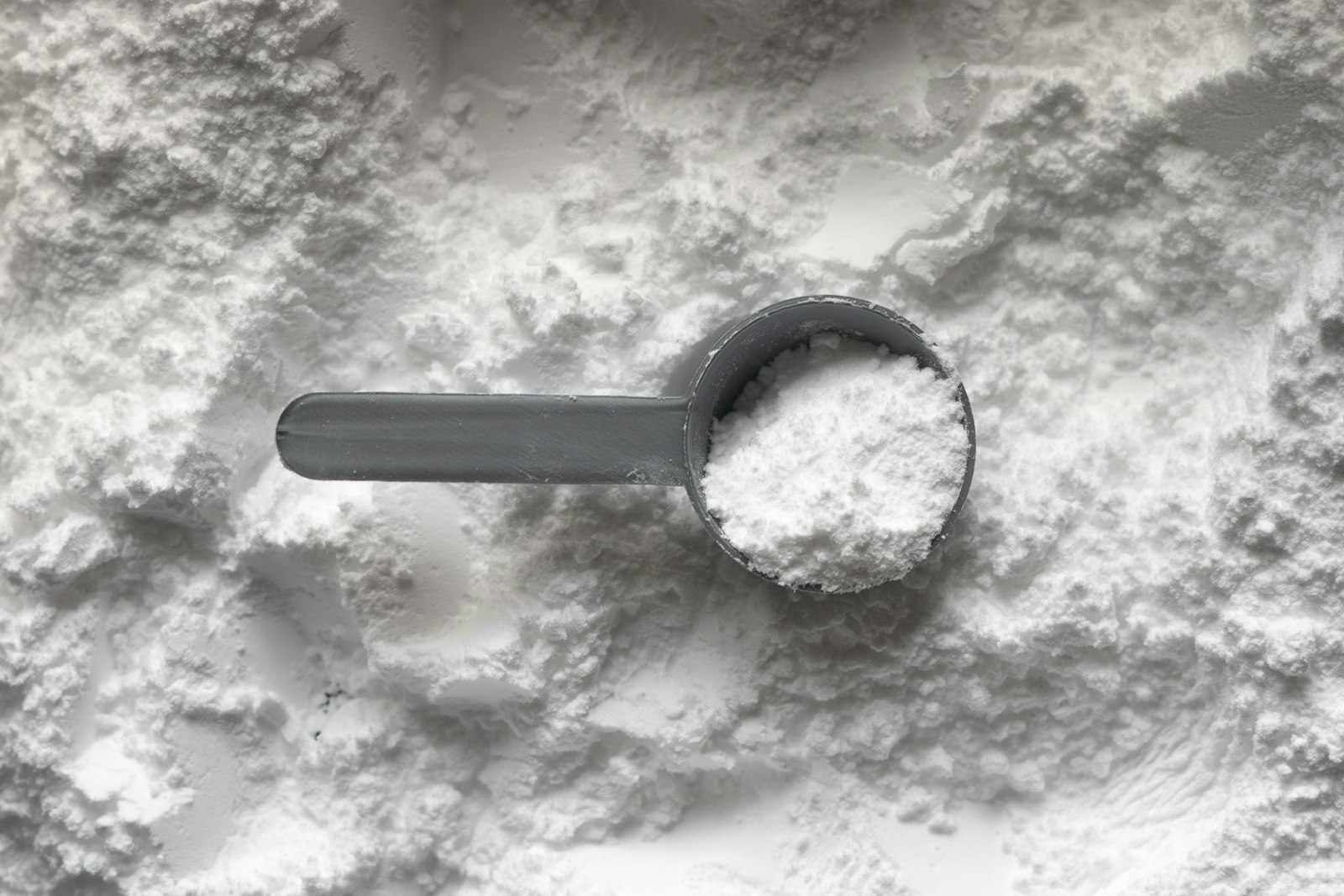
Quick answer: Take 3-5g of creatine monohydrate daily. You don't need to load. Timing doesn't matter much — just be consistent. Mix it with water, juice, or a protein shake. That's it. Everything below explains the nuance behind why, and what common mistakes to avoid.
Why Getting Creatine Dosing Right Actually Matters
Creatine is one of the most researched supplements in existence — over 1,000 peer-reviewed studies and counting. It works. The mechanisms are well-understood. And yet, it's surrounded by unnecessary complexity created largely by supplement marketing.
The goal of creatine supplementation is to saturate your muscle cells with phosphocreatine, which your body uses to regenerate ATP (adenosine triphosphate) — the molecule that powers intense, short-duration effort. More phosphocreatine = more capacity to sustain high-intensity work = more strength, more reps, faster recovery between sets.
Getting to saturation and staying there is the whole game. Here's exactly how to do it.
Step 1: Choose the Right Form
Before dosing, you need to pick your creatine. The short answer: creatine monohydrate is the gold standard. This isn't even close.
Creatine HCl, creatine ethyl ester, creatine nitrate, and buffered creatine (Kre-Alkalyn) have all been marketed as superior alternatives. The research doesn't support the premium. Multiple head-to-head studies show creatine monohydrate saturates muscles as effectively as any other form — and it's far cheaper per effective dose.
The one exception worth knowing: Creapure is a premium form of creatine monohydrate manufactured by AlzChem in Germany. It's not chemically different from other monohydrate, but it undergoes rigorous purity testing and third-party verification. Most contamination concerns with creatine involve manufacturing shortcuts — Creapure addresses this.
Recommended products:
Thorne Creatine Monohydrate — $32, NSF Certified for Sport, simple and clean. Thorne is a trusted brand with rigorous quality standards. 90 servings.
Momentous Creatine Monohydrate — $34.95, NSF Certified for Sport + Informed Sport (dual certified), uses Creapure. The best option for athletes in tested sports.
Both are NSF Certified for Sport, meaning they've been independently tested for banned substances and label accuracy. If you're in a tested sport, that certification matters.
Step 2: Decide Whether to Load
The Loading Protocol (Optional)
What it is: 20g/day for 5-7 days, split into four 5g doses throughout the day.
What it does: Accelerates muscle saturation to roughly 5-7 days instead of 3-4 weeks.
The research: A classic study by Harris et al. (1992) established that loading with 20g/day for 6 days increased total muscle creatine content by approximately 20%, reaching saturation faster than lower maintenance doses.
The downside: Some people experience GI discomfort (cramping, loose stools) at 20g/day, particularly if taken in large single doses. Taking 5g doses spread across the day reduces this.
Skip the Loading — You'll Get There Anyway
What it is: 3-5g/day from day one, no loading phase.
What happens: You reach the same muscle saturation level as loading — it just takes 3-4 weeks instead of 5-7 days.
The practical reality: Unless you have a competition or race in the next two weeks and you want to maximize creatine stores immediately, loading provides no long-term advantage. You end up in the same place; loading just gets you there faster. For most people starting creatine, there's no urgency — take the slower route and avoid the GI issues.
The verdict: Don't load unless you have a specific near-term reason to saturate faster. 3-5g/day is the straightforward protocol most researchers recommend.
Creatine Protocol Comparison
| Protocol | Daily Dose | Saturation Time | Best For |
|---|---|---|---|
| Loading | 20g/day (4x5g) for 5-7 days, then 5g/day | 5-7 days | Pre-competition, fast results |
| No-Load Maintenance | 5g/day from day one | 3-4 weeks | Most people, avoid GI issues |
| Conservative | 3g/day | 4-6 weeks | Smaller individuals, women |
| Creatine Forms | Dose | Evidence Level | Notes |
| Monohydrate (Creapure) | 5g/day | Strongest | German-manufactured, highest purity |
| Generic Monohydrate | 5g/day | Strong | Effective, less quality control |
| HCL | 1.5-2g/day | Moderate | Higher cost, no advantage proven |
| Buffered (Kre-Alkalyn) | 1.5-3g/day | Weak | Not better than monohydrate |
Step 3: Nail the Daily Dose
Standard dose: 3-5g per day
This is the dose used in the vast majority of creatine research. It's also what will maintain muscle saturation once you're loaded (or after ~4 weeks of daily use at this dose).
More is not better beyond saturation. Your muscles can only hold so much phosphocreatine. Excess creatine is simply excreted. Studies looking at higher doses (10g+/day) haven't found additional performance benefits, and they do increase the risk of GI issues.
Body weight considerations: Some researchers suggest a body weight-based calculation of 0.03g/kg/day for maintenance. For a 180lb (82kg) person, that's ~2.5g. For a 220lb (100kg) person, that's ~3g. In practice, the standard 5g/day covers virtually everyone and there's no disadvantage to the extra gram or two. Just take 5g.
One exception: Women and smaller individuals may achieve saturation at 3g/day and can start there. The muscle creatine capacity scales somewhat with muscle mass.
Step 4: Timing — Does It Matter?
This is one of the most over-discussed topics in creatine supplementation. Here's what the evidence actually says:
Timing is not meaningfully important for most people. What matters is daily consistency, not the clock.
That said, a few studies have found a slight advantage to post-workout creatine intake. A 2013 study in the Journal of the International Society of Sports Nutrition by Antonio and Ciccone found that post-workout creatine produced marginally better lean mass and strength gains than pre-workout creatine over 4 weeks in recreational bodybuilders. The effect size was small but consistent.
The hypothesized mechanism: post-exercise, muscles are more insulin-sensitive, which may enhance creatine uptake alongside glucose and amino acids. This is plausible but hasn't been definitively established.
Practical recommendation: If you train, take creatine after your workout with a meal or shake. On rest days, take it with any meal — it doesn't matter when. If you forget the post-workout window, just take it whenever. Consistency over weeks and months matters far more than whether you took it at 4pm or 7pm.
Step 5: What to Take It With
With water: Works fine. Creatine dissolves better in warm water, but cold is acceptable.
With carbohydrates: Research from the early 2000s (Green et al., 1996) showed that combining creatine with carbohydrates increased insulin-mediated creatine retention in muscles. In practice, this means taking creatine with a meal, juice, or a shake containing carbs is marginally better than taking it fasted. The difference matters more during an initial loading phase than during maintenance.
With protein shakes: Completely fine. Protein shakes often contain some carbs and amino acids that support creatine uptake. This is a convenient and effective option.
Avoid: Acidic beverages like straight lemon juice can degrade creatine to creatinine over time. This is mostly a concern if you're premixing and letting it sit for hours. Take it fresh or mix just before drinking.
Common Mistakes to Avoid
Mistake 1: Cycling On and Off
You've probably heard advice to "cycle" creatine — take it for 8 weeks, come off for 4, repeat. There is no scientific rationale for this. Creatine is not a stimulant, it doesn't downregulate receptors, and it doesn't suppress natural production in a way that warrants cycling. Long-term creatine supplementation has been studied for years with no indication it's necessary or beneficial to periodically stop. Take it daily until you decide to stop.
Mistake 2: Skipping Days
Creatine builds up in muscle tissue over time. Missing a day or two won't devastate your stores — muscle creatine depletes slowly. But regular inconsistency adds weeks to the time it takes to reach saturation or maintain it. Set a daily reminder and make it automatic.
Mistake 3: Using Cheap, Uncertified Creatine
Creatine is one of the most counterfeited supplements on the market. Studies have found creatine products contaminated with heavy metals, underdosed relative to their label, and in some cases containing banned substances. Choosing an NSF Certified for Sport product isn't paranoia — it's basic quality control. The price difference between a certified and non-certified product is minimal.
Mistake 4: Expecting Immediate Results
Some people feel increased training capacity within the first week or two as creatine stores build up. Others take 3-4 weeks to notice anything. And the effects are subtle — you're not going to feel a dramatic buzz. You'll notice you can do a few more reps at a given weight, or that your last set doesn't fall off as much. The cumulative effect over months of training is significant, but it's not a short-term performance drug.
Mistake 5: Worrying About "The Best Time"
Re: the timing question — don't let perfect be the enemy of good. Take your 5g, move on. If you get caught up optimizing creatine timing while skipping training sessions or undereating protein, you're looking in the wrong direction.
The Science: What Does the Research Actually Show?
Creatine's mechanism and efficacy are about as well-established as any supplement gets:
Strength and power: A 2017 meta-analysis in the Journal of Strength and Conditioning Research (Lanhers et al.) analyzing 22 RCTs found creatine supplementation produced significant improvements in both upper and lower body strength, with effect sizes of 0.25-0.36 — modest but consistent across the population.
High-intensity exercise: A 2003 meta-analysis by Lemon et al. and subsequent reviews consistently show creatine improves performance in activities lasting under 30 seconds (sprints, heavy lifting, plyometrics). The mechanism — replenishing phosphocreatine for ATP regeneration — is directly relevant to resistance training.
Brain health: More recent research suggests creatine may support cognitive function, particularly under conditions of mental fatigue or sleep deprivation. A 2022 systematic review in Nutrients found evidence for cognitive benefits, though the research is less mature than the exercise performance data.
Safety: Creatine is exceptionally well-studied for safety. The International Society of Sports Nutrition's position paper states it is safe for healthy individuals at recommended doses. Claims about kidney damage have been repeatedly investigated and not supported in people without pre-existing kidney conditions.
Recommended Products
Thorne Creatine Monohydrate
The simplest, cleanest, most accessible option. Thorne has been manufacturing pharmaceutical-grade supplements for decades, and their creatine reflects that. NSF Certified for Sport. 5g per serving, unflavored, mixes easily.
- Price: $32 (~90 servings)
- Cost per serving: ~$0.36
- Best for: Budget-conscious users, everyday training
- Buy on Amazon
Momentous Creatine Monohydrate (Creapure)
The premium option, using Creapure (German-manufactured creatine monohydrate with higher purity standards). Dual-certified by NSF Certified for Sport and Informed Sport — ideal for professional athletes or anyone in a tested sport.
- Price: $34.95 (~60 servings)
- Cost per serving: ~$0.58
- Best for: Athletes in tested sports, those prioritizing purity
- Buy from Momentous
The Bottom Line
Creatine works. It's among the safest and most effective supplements available. The protocol is simple: 5g/day, every day, from a certified source.
You don't need to load. You don't need to time it precisely. You don't need to cycle off. You don't need a special "transport matrix" or carb formula. Take 5g, be consistent for a month, then pay attention to your training performance. The data will speak for itself.
FAQ
Do I need to drink more water when taking creatine? Creatine draws water into muscle cells — this is part of why muscles appear fuller when creatine-loaded. This slightly increases your total body water, and adequate hydration is important. Aim for at least 2-3 liters of water per day when supplementing. This isn't dramatically different from standard hydration recommendations for active people.
Will creatine cause water retention or bloating? The "bloated" look sometimes associated with creatine is from intracellular water in the muscles (a good thing — it supports cell volumization). This is different from subcutaneous water retention (the "puffy" look). Most people don't experience noticeable bloating. If you do, switching to smaller doses (2.5g twice daily instead of 5g once) can help.
Does creatine work for women? Yes, and it's understudied. The majority of creatine research has been conducted in men, but the available evidence for women shows similar benefits in strength, power, and potentially cognitive function. Women's smaller average muscle mass may mean 3g/day is sufficient rather than 5g.
Should I take creatine on rest days? Yes. Muscle creatine stores deplete gradually when you stop supplementing — taking it daily on both training and rest days maintains the saturation level your muscles need. Skip the gym, don't skip the creatine.
Can I take creatine with caffeine? Earlier research suggested caffeine might blunt creatine's ergogenic effects, but more recent work contradicts this. A 2012 study in the Journal of the International Society of Sports Nutrition found no meaningful interference between caffeine and creatine when taken together. Taking both is fine.
Related Articles
- Best Creatine Supplements 2026 — our top-rated creatine picks with full Freak Scores
- Thorne Creatine Review — deep dive on the NSF-certified Creapure creatine
- Best Protein Powder 2026 — pair creatine with a quality protein source for optimal results
- Best Pre-Workout Supplements 2026 — many pre-workouts include creatine; check your total daily dose
- Whey vs Plant Protein: Which Is Better for Muscle? — complete your supplementation stack
Prices shown may vary. Links may be affiliate links.